I have led so many tours through Kyoto that I have lost count. After years of doing this, the question I hear most still comes before the ride even starts. It is some version of the same concern. Is a guided tour really worth it, or could I just rent a bike and work it out myself?
This guide is my honest answer. It covers what a Kyoto bike tour is, what the new 2026 laws mean for you, what a day actually looks like, and how to pick a tour worth your time. If you want the short version, our bike tours run small, we stay off the main roads, and we show you a side of Kyoto you won't find on your own.
What Is a Kyoto Bike Tour, and Who Is It For?
Most people picture a long line of riders struggling uphill behind a guide waving a flag. That is not what this is.
How a guided e-bike tour actually works
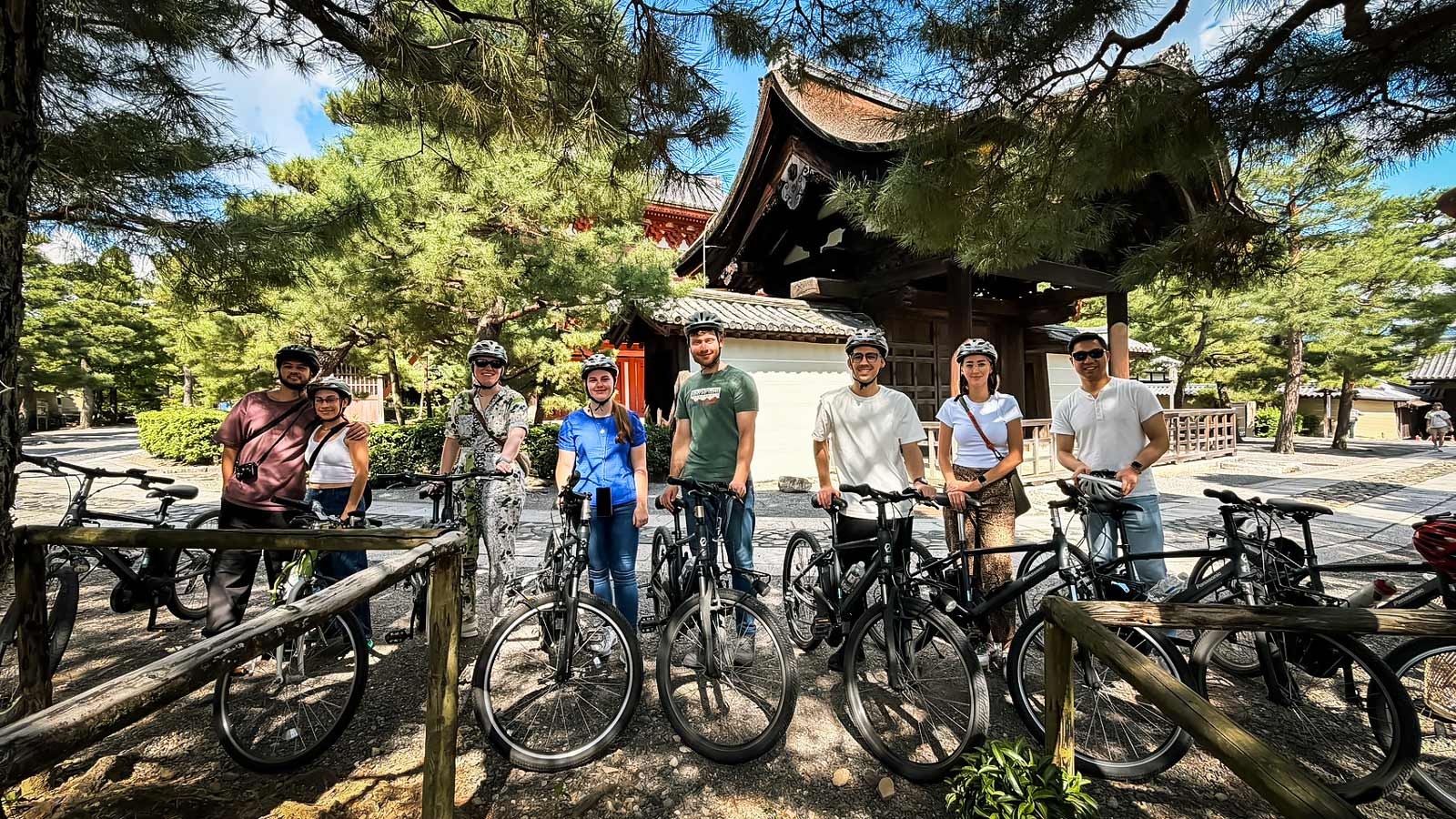
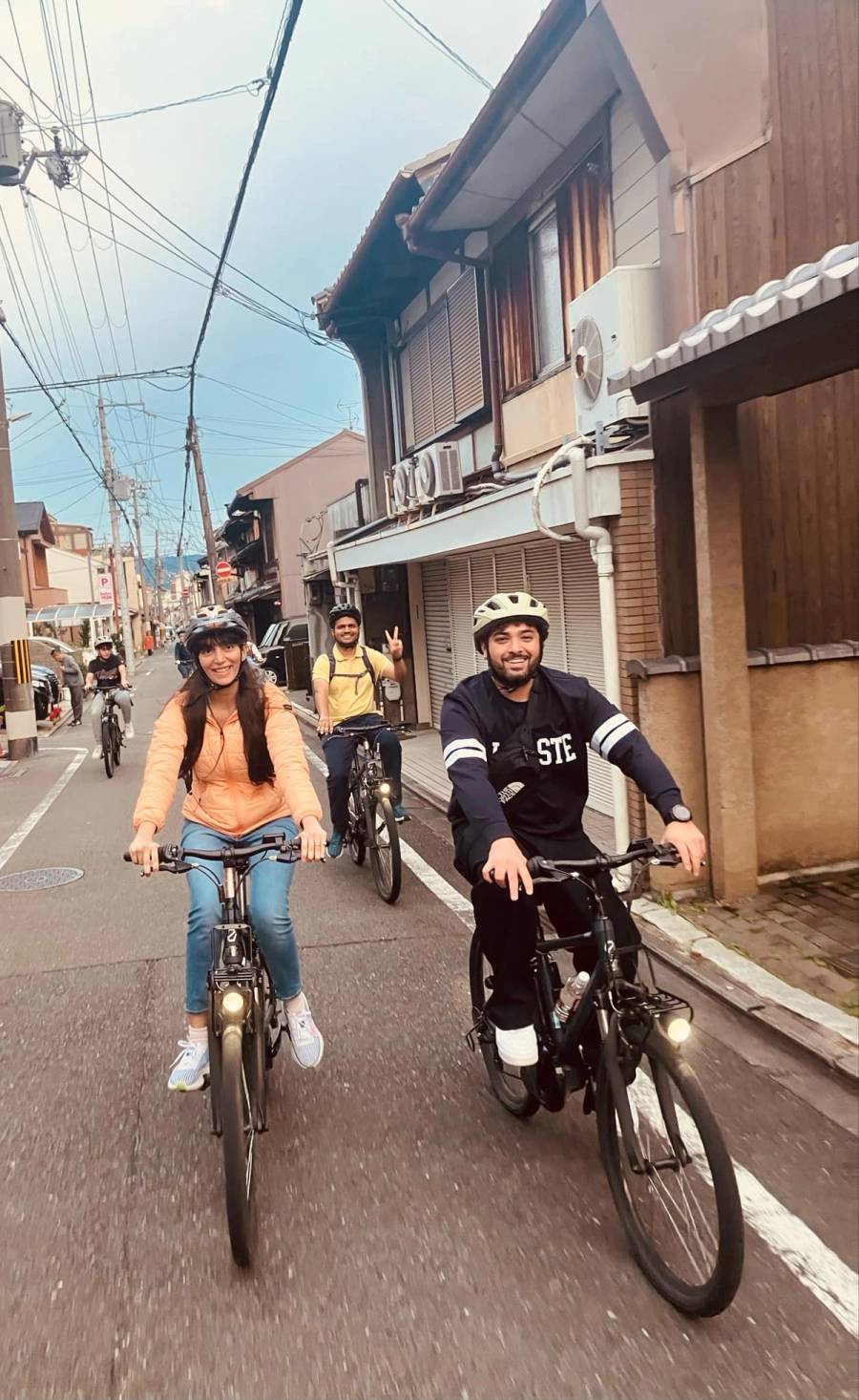
A NORU tour is a small group on electric bikes. We cap every ride at eight people. A local guide leads, sets the pace, and handles the route. You do not plan anything. You do not read a map. You follow, you stop where we stop, and you look at what is in front of you. The guide watches the group the whole way.
Who books one: families, older couples, and first-time visitors
The people who get the most out of a tour are not athletes. They are families with teenagers. They are couples in their sixties and seventies. They are first-time visitors who do not want to spend their trip lost. Some of my best days have been with older riders who told me afterward they would never have reached that part of the city alone.
Why e-bikes remove the fitness barrier
Our bikes are electric-assist (電動アシスト自転車, denki asisto jitensha). The motor helps when you pedal. Kyoto has hills, and the assist turns a hard climb into an easy one. You still pedal. You just do not strain. This is why we can take a mixed group and keep everyone together. If you can ride a normal bike, you can ride ours. We explain more about why an e-bike tour beats walking elsewhere on the site.
What a Kyoto bike tour is not
It is not a race. It is not a fixed list you tick off. It is not a coach tour with a bike attached. We do not herd you past the same five postcards every other group sees. If that is what you want, a bus is cheaper. People choose us for the opposite reason.
How Kyoto's 2026 Cycling Laws Changed the Case for a Tour
Since the first of April this year, I have seen police stopping cyclists in numbers I never used to see.
The Blue Ticket system and on-the-spot fines
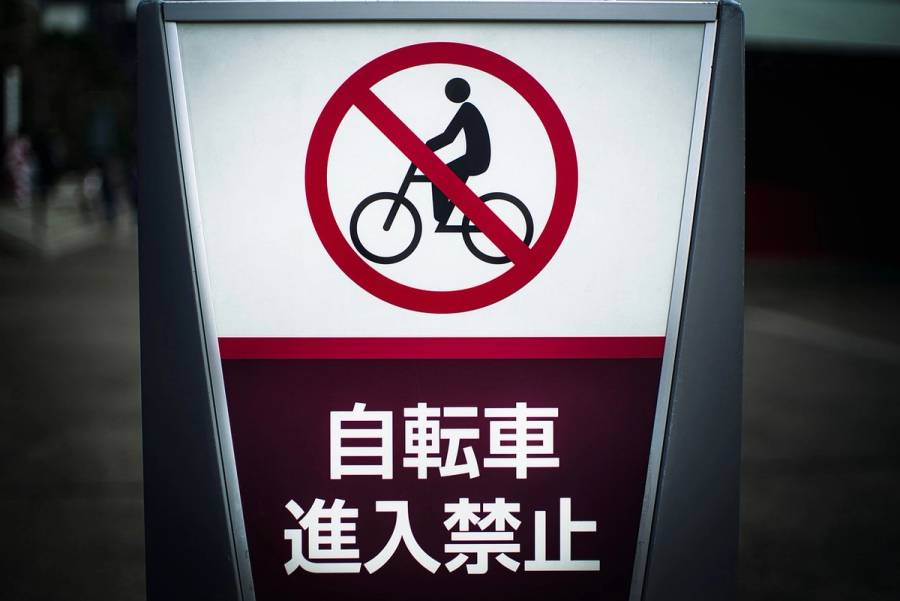
In April 2026 Japan brought in a new system for cyclists. People here call it the Blue Ticket (青切符, aokippu). Police can now fine riders on the spot for things they used to let slide. The fines are real money, not warnings. The first month under the new rules saw more than two thousand tickets issued across the country. You can read the official rules on Japan's National Police Agency site, and The Japan Times has covered the rollout.
The rules visitors break without realizing
Most tourists break the rules by accident. They ride on the wrong side. They ride on footpaths where it is not allowed. They look at a phone while riding. They ride two abreast and chat. All of these can now cost you. None of them feel like crimes. That is the problem. We cover the Kyoto-specific rules, routes and fines and the wider Japanese bicycle laws in full.
How riding with a guide keeps you on the right side of the law
Before we ride, every guest gets a briefing. We explain where to ride, which side, and how to behave at lights and crossings. Then the guide leads, and you follow a line that is already legal. The same applies to e-bike rules, which differ from a normal bike. We explain how e-bikes fit Japan's laws so nothing surprises you.
Guided Kyoto Bike Tour vs Renting a Bike Yourself
The real cost of renting once you add everything up
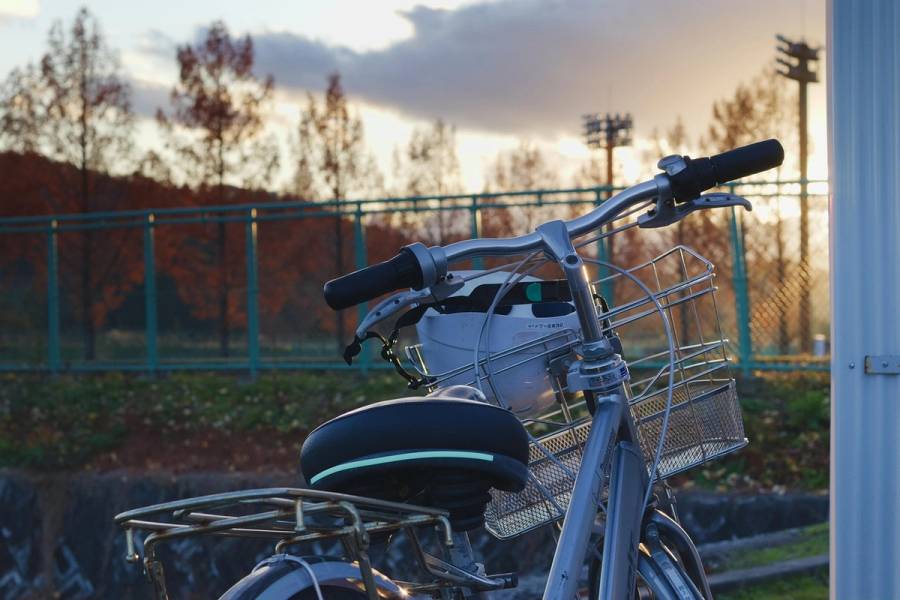
A rental e-bike in Kyoto runs around 1,700 to 1,800 yen a day. That sounds cheap next to a tour. But you need to calculate the time and effort it will take to plan a bucket-list tour of a city that you don't know your way around. You add the risk of a fine you did not see coming and then the hours you could spend lost instead of looking... We lay out the full rental versus guided tour comparison in its own article.
Navigation, language, and the getting-lost problem
Kyoto looks like a simple grid, but that is a little misleading. Once you leave the main roads, the backstreets can bend and split. Signs are in Japanese. Most guests who rent tell me later they spent half the day working out where they were. On a tour, you never look at a map. You get to chill, check out the view, and take it all in.
When renting on your own actually makes more sense
Sometimes renting is the right call. If you have ridden Kyoto before, renting a bicycle might best fit your needs. If you read Japanese and know the rules, rent. If you want to wander with no plan and no clock, rent. A lot of people do a guided tour first, then rent the next day using what they learned. That is a smart way to do it.
Are Kyoto Bike Tours Worth It?
Worth it is the wrong question on its own. The real question is worth it compared to what.
What you are actually paying for at ¥15,000
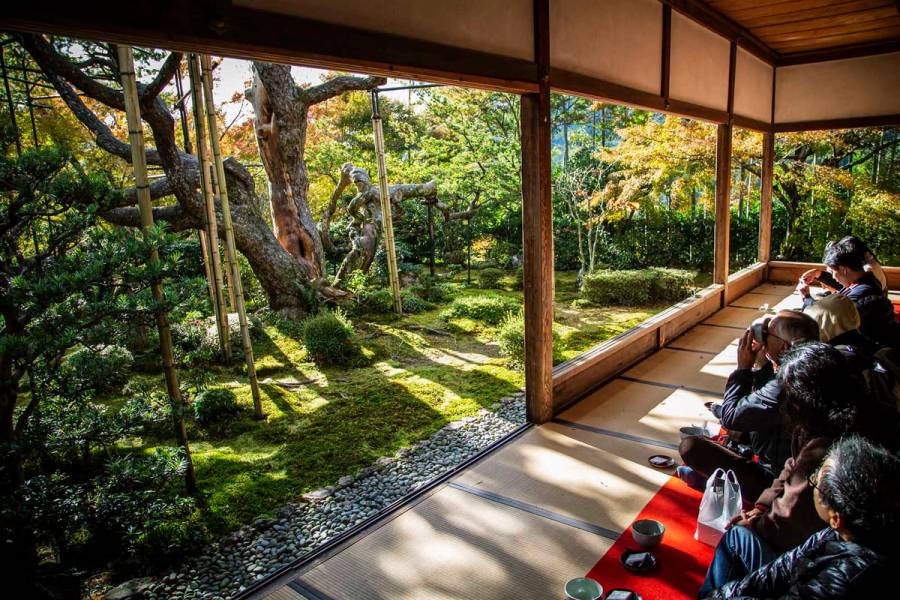
Both our standard tours are 15,000 yen per person. For that you get the e-bike, the helmet and safety gear, temple entrance fees, a bilingual local guide, a small group, a local snack tasting, and bottled water on the ride. You get someone who watches the traffic so you do not have to. You get stops chosen by someone who rides here every week. You are not paying for a bike. You are paying for the day to be easy and the route to be good.
The local knowledge you cannot get from a search engine
You can find the famous temples online in a minute. What you cannot find is which lane is quiet at four o'clock, or which gate the crowds miss. That knowledge comes from years, not searches. It is the reason a local guide changes the day. We go deeper on whether a Kyoto bike tour is worth it in a dedicated piece.
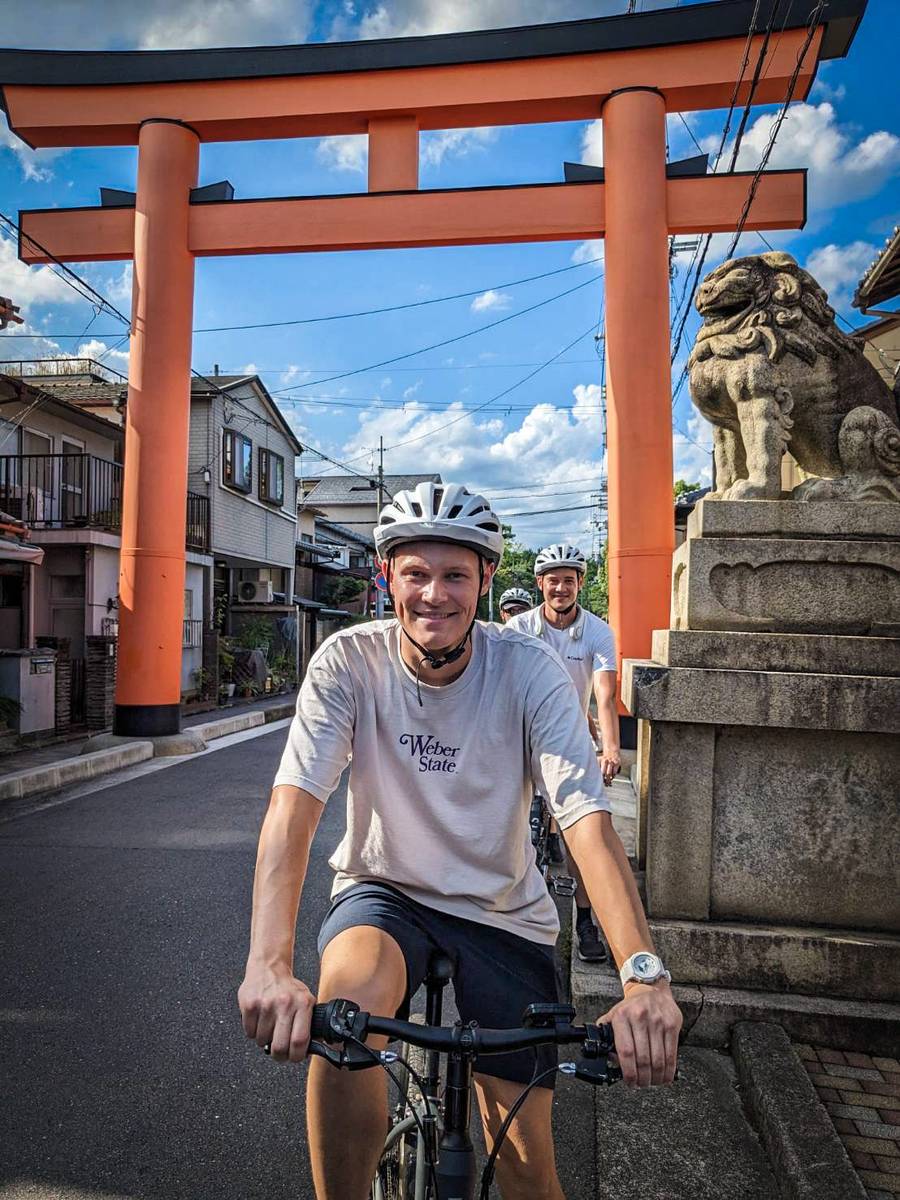
What to Expect on a Kyoto Bike Tour
People arrive nervous about two things. The traffic, and whether they will hold the group up. By the first stop, both worries are usually gone.
The meeting point and the bike fitting
You meet us at our base (check out NORU's homepage). We match each rider to a bike and size it. Our fleet is the Panasonic Hurryer, a Japanese-spec e-bike. We set your seat, check your brakes, and show you the assist controls. You take a short test loop before we leave.
The pre-ride briefing on road rules and etiquette
The briefing covers two things.
- First, the law: which side to ride, where bikes belong, how to handle lights.
- Second, the etiquette: how we ride as a group, when to single out, how to pass people on foot.
- Third, e-bike basics: understand how the bike works and the gear settings.
It takes a few minutes. It is the reason the rest of the day feels calm.
What to bring and what to wear
Bring less than you think. Wear clothes you can move in and shoes you can pedal in. Bring a layer in the cooler months. We sort the rest. There is a full list in our guide on what to bring on a Kyoto bike tour. For first-time visitors, Inside Kyoto is a good general primer on the city.
How to Choose a Good Kyoto Bike Tour Operator
I only hire guides who have lived here for years and speak English well. There is a reason that is rare, and a reason it matters.
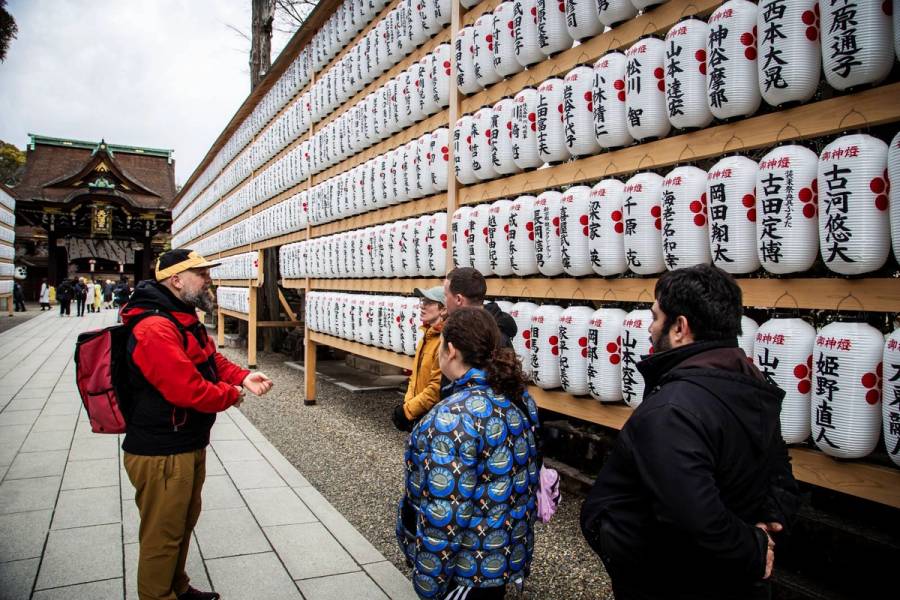
Why small group size changes everything
Group size is the first thing to check. We cap at eight. A big group moves slowly, stops less, and gives you no time with the guide. A small group can turn down a narrow lane and stay together. It can change plans for the weather or the crowds. We explain why small-group tours work better in detail.
What separates a real guide from a tour script
NORU's guides have lived in Kyoto for years. They know shop owners by name. They know which street is worth a detour today and which is not. That is the difference between a tour and a recital.
Safety, equipment, and honest expectations
Ask about the bikes and the safety routine. We use one consistent fleet, we brief every rider, and we ride routes we know well. Be wary of any operator who promises you will dodge every crowd or that nothing can ever go wrong. A serious operator tells you the truth and rides carefully. We treat safety as the core of a guided ride.
Where Kyoto Bike Tours Go, and the Routes Worth Riding
Two riders can spend the same four hours in this city and see two different places. The route is everything.
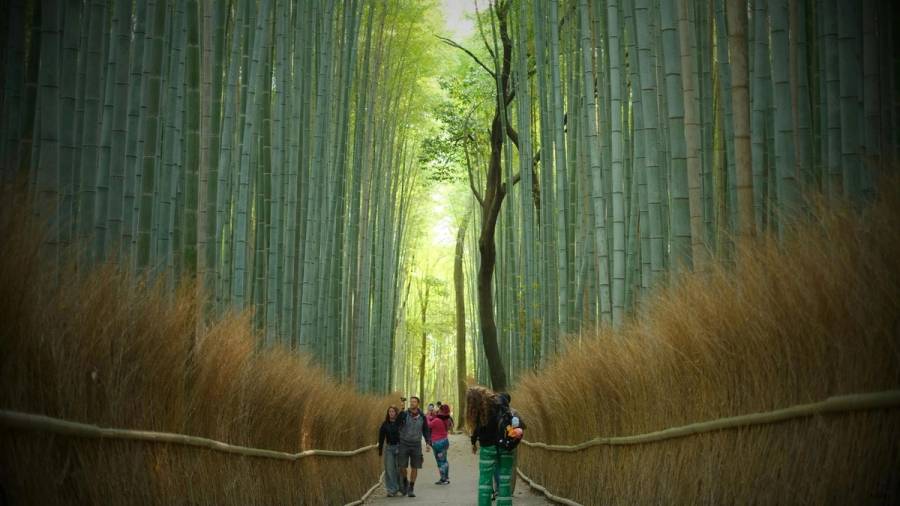
The Arashiyama side and the western edge
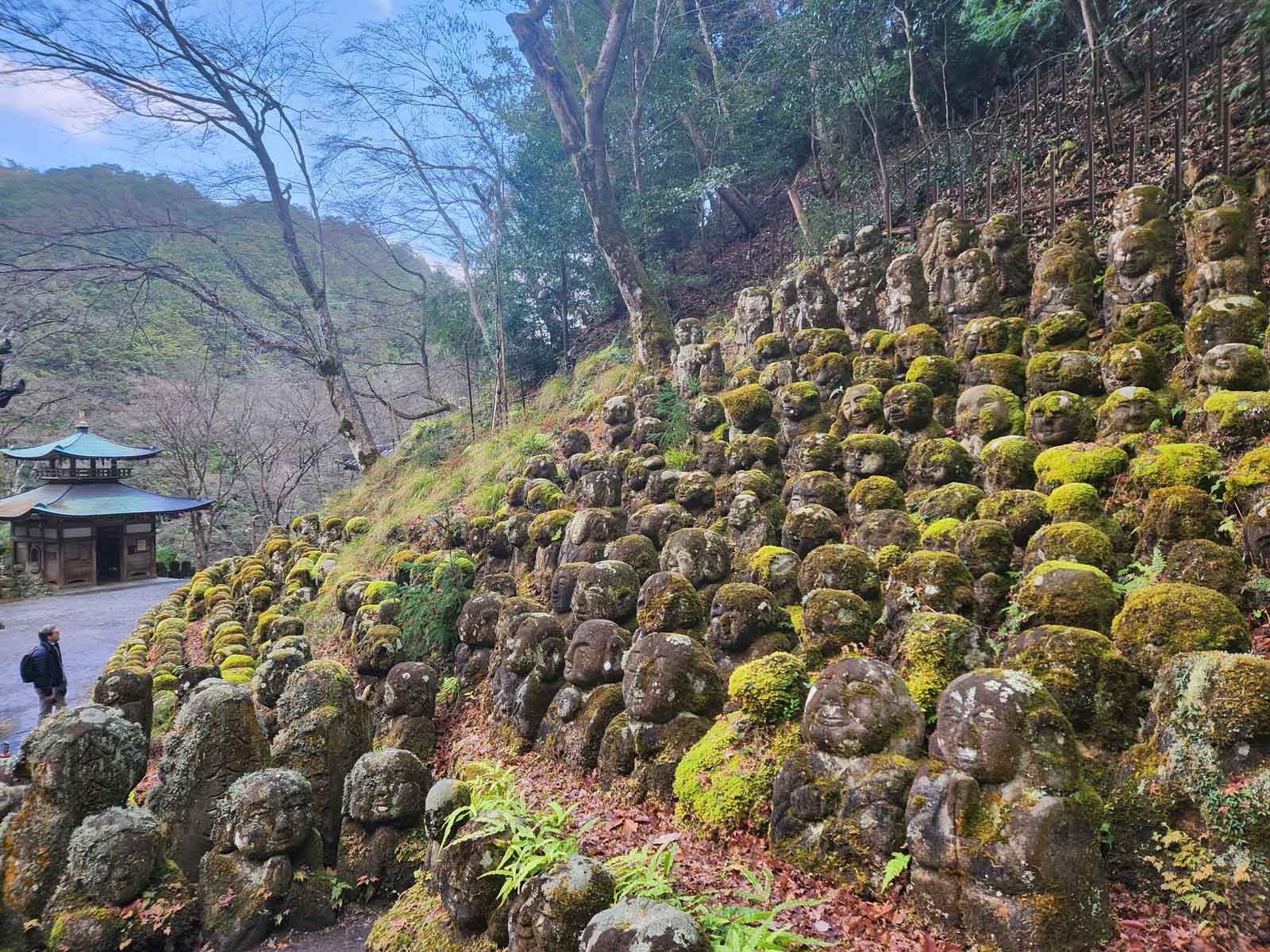
Arashiyama sits on the western edge of Kyoto. Most people know the bamboo grove. Fewer know the quiet roads and small temples around it. Our Arashiyama ride reaches both. We explain why Arashiyama is worth cycling and how to see the bamboo grove without the crowds.
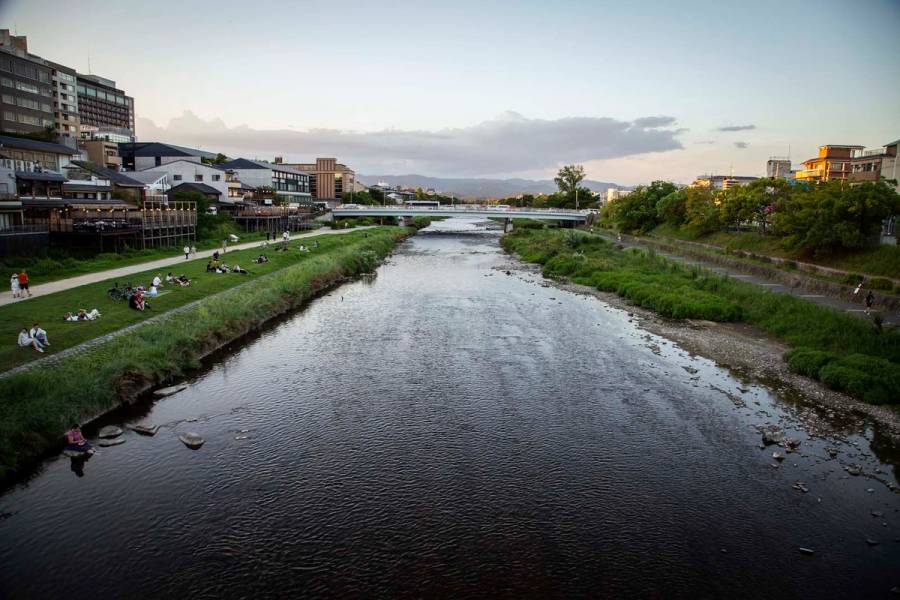
The Kamo River and the flat city center
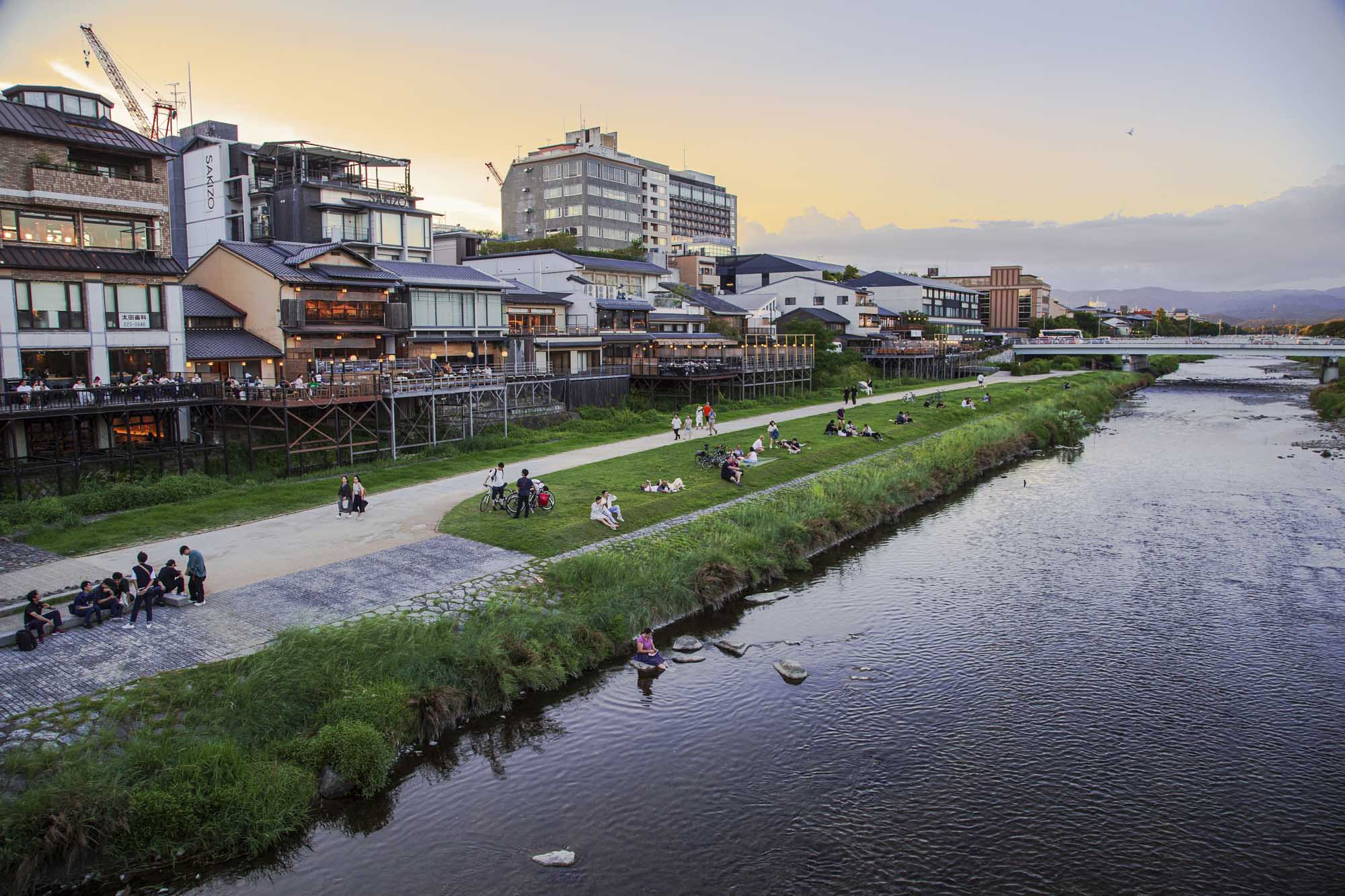
The Kamo River (鴨川, Kamogawa) runs through the middle of the city. The path beside it is flat and calm. It is the easiest riding in Kyoto and some of the prettiest, especially in spring. If your interested in routes along the Kamo River, check out our private tour package.
The quieter backstreets most visitors never reach
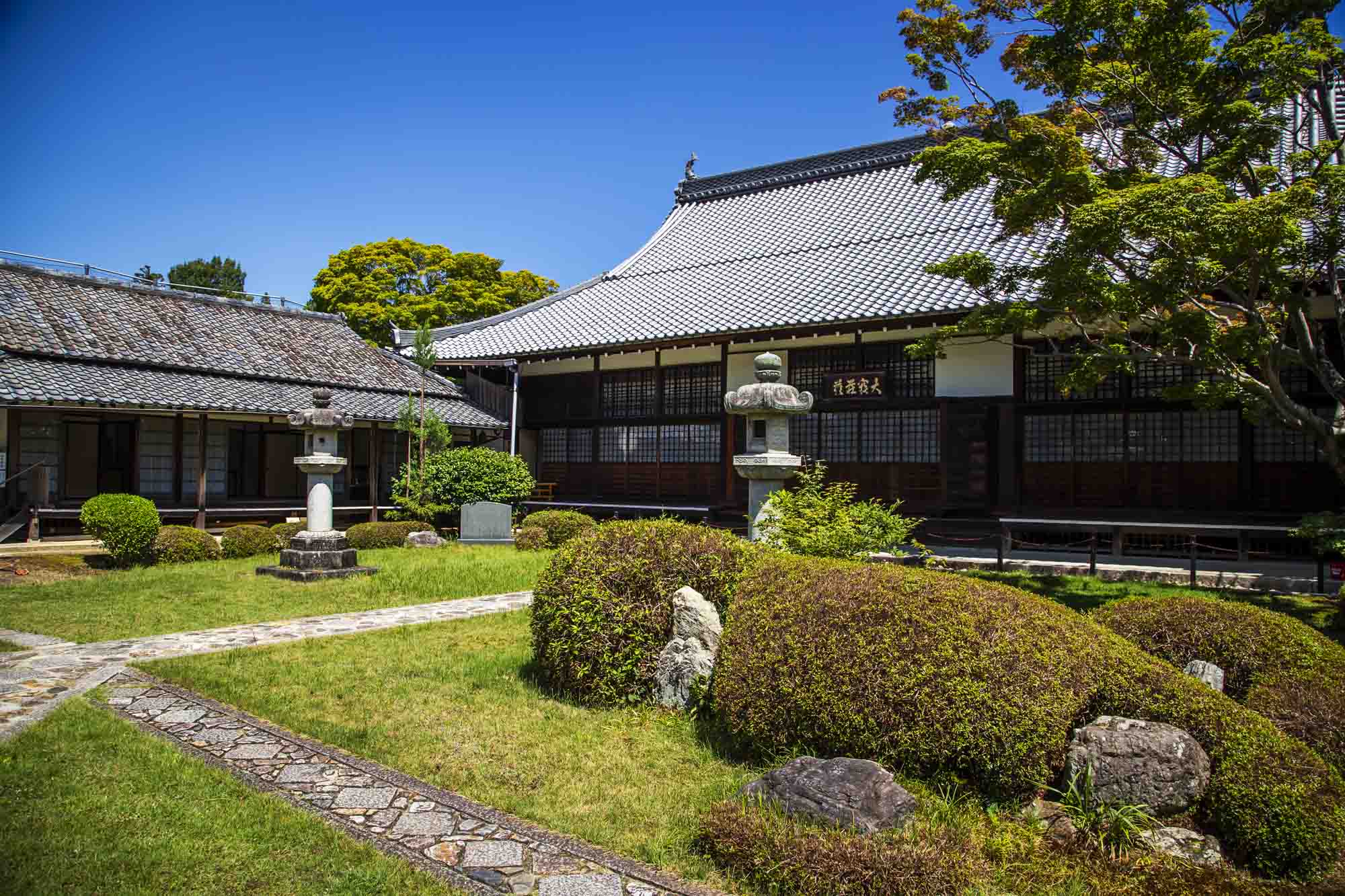
North and east of the centre, the city goes quiet. Narrow lanes, small shrines, houses that have stood for generations. I am not going to map these here. Some of them work because they are not on every itinerary. What I will say is that this is where the best parts of our days happen. We cover the idea in our routes worth riding guide, again without giving the game away.
The famous spots good tours deliberately skip
Some places are better skipped on a bike. Kiyomizu-dera in the afternoon is a wall of people. The Gion lanes ask you to walk your bike anyway. Kinkaku-ji is worth seeing, but not by fighting a car park on two wheels. A good route knows what to leave out.
The Best Time of Year for a Kyoto Bike Tour
There is no bad season here. There are seasons you ride differently. In a couple of them, the start time matters more than anything.
Spring and the cherry blossom window
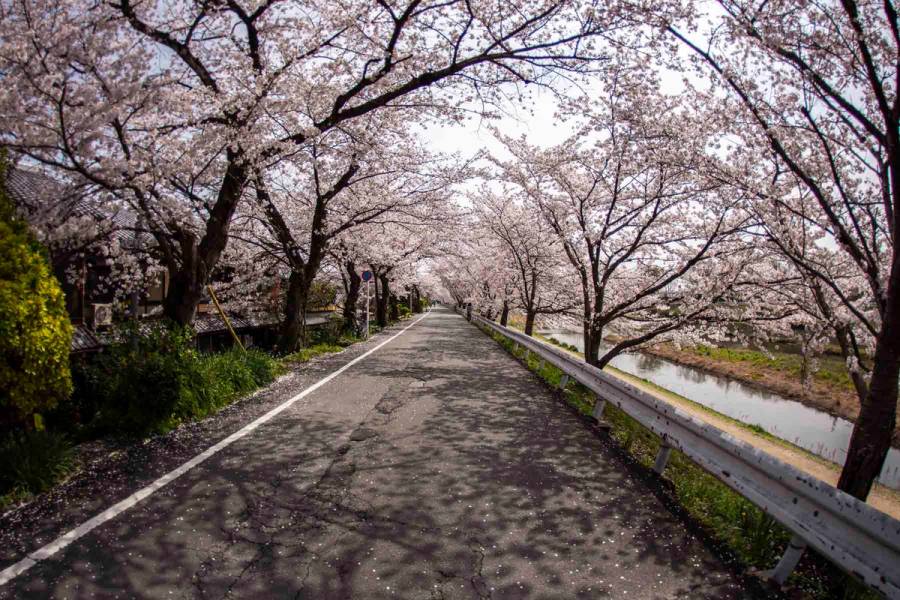
Spring is the busiest season for good reason. The cherry blossom (桜, sakura) along the river is the best riding of the year. The bloom is short, usually early April, and the dates move. We adjust routes to the bloom as it happens. Our cherry blossom tour guide covers the timing.
Summer heat and why we start early
Kyoto summers are hot and humid. The city sits in a basin, so the heat sits with it. We start early in summer for that reason. A morning ride catches the river breeze and the cooler air. By midday it is too hot to enjoy. Our summer e-biking guide explains how we handle it.
Autumn colour and the second crowd peak
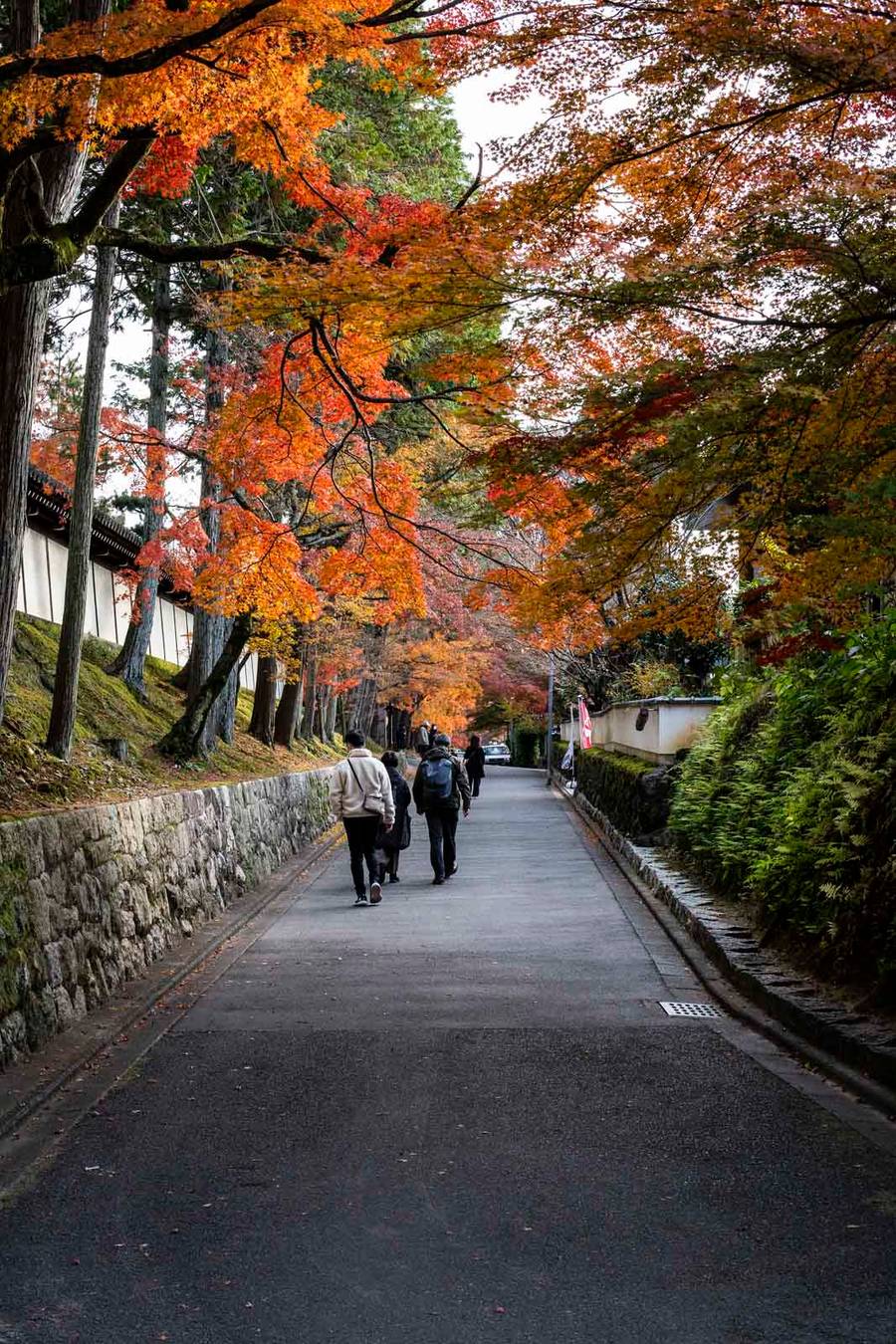
Autumn rivals spring. The leaves (紅葉, kōyō) turn through November and into early December. The colour comes down from the hills slowly, so the season lasts. Crowds return in autumn, so timing and route matter again. It is a fine time to ride.
Winter quiet and the light you only get in January
Winter is cold and quiet. Fewer visitors, clear light, and the occasional morning of snow. You dress in layers and ride mid-day. The city feels like it belongs to the people who live here. For the full picture across the year, see our best time to cycle Kyoto guide and the Japan Meteorological Agency for the weather.
The Hidden Side of Kyoto You Only See by Bike
The places that make this job worth doing are not on a map. I am not going to put them on one. Naming them is how they stop being what they are.
The kind of stop you would ride straight past alone
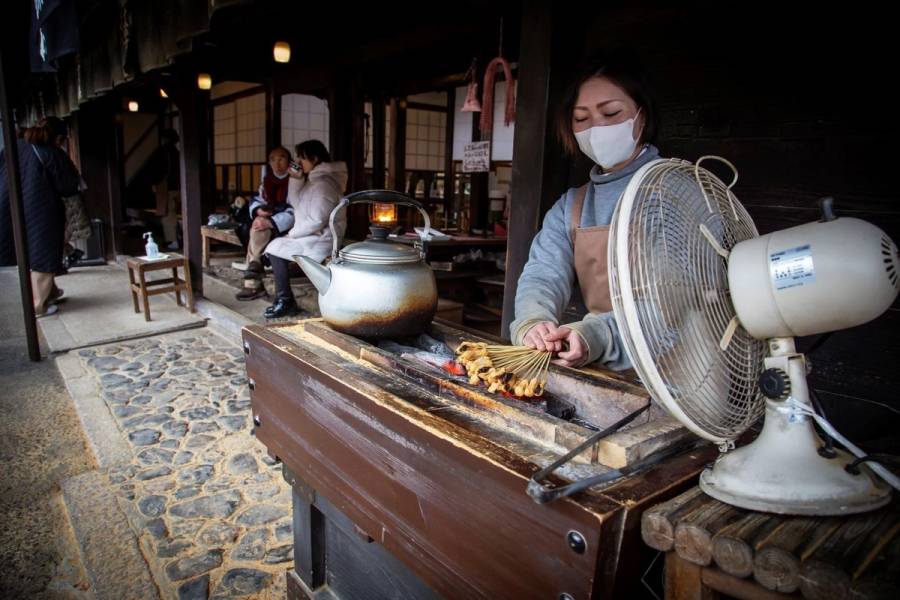
On most of our days there is a stop that surprises people. A small place, easy to miss, that means nothing from the road. You would ride straight past it alone. With someone who knows it, it becomes the part you remember. I will leave it there.
Traveling like a resident, not a tourist
This is the whole point for me. We want you to ride Kyoto the way someone who lives here would. Quiet streets, ordinary moments, the city at its own pace. It is also gentler on the city, which matters. We care about sustainable, low-impact tourism, and a bike is part of that.
NORU's Kyoto Bike Tours and How to Book
If you have read this far, here is exactly what we run and what each one suits.
Secret Kyoto E-Biking (3h 45m)
Our Secret Kyoto E-Biking tour is the shorter ride. It is three hours and forty-five minutes and around fourteen kilometers. It is easy riding, suited to all levels. It is the best choice if you want hidden corners over famous names. It is 15,000 yen per person.
Arashiyama E-Biking (4h 30m)
The Arashiyama E-Biking tour is the longer ride. It runs around four and a half hours and covers around twenty-four kilometers. It is moderate, with more distance and some gentle climbs the e-bike handles for you. It pairs the western hills with the quieter roads around them. It is also 15,000 yen per person.
Private Tours
A private tour is for groups who want the day shaped around them. The pace, the focus, and the route flex to suit you. Pricing is custom. This works well for families and for anyone who wants the guide to themselves.
Both standard tours include the e-bike, helmet, temple entrance fees, a bilingual local guide, a snack tasting, and bottled water. Lunch is not included; we stop at a local spot where you can pick something up.
How to book and what happens after you do
Booking is done online. You pick a tour and a date, and you are set. Both standard tours run small, capped at eight riders, so dates fill in the busy seasons. Book ahead in spring and autumn.
Ready to ride Kyoto the local way?
Our small-group e-bike tours stay off the main roads and keep groups to eight. Pick the Secret Kyoto or Arashiyama ride, or build your own with a private tour.
Frequently Asked Questions
NORU Kyoto Bike Tour's standard tours are 15,000 yen per person. That is the Secret Kyoto ride and the Arashiyama ride. Private tours are priced to suit the group. The price includes the e-bike, the guide, and the route.
Yes, within limits. The minimum age is thirteen. Riders under 145 centimeters should contact us first so we can check the bike fit. Families with teenagers are some of our most common guests.
Book early for spring and autumn, our two busy seasons. Groups cap at eight, so popular dates go first. In quieter months you have more flexibility.
Both tours run small groups, both cost 15,000 yen per person, and both include the e-bike, helmet, temple entrance fees, a bilingual guide, a snack tasting, and bottled water. The difference is the ride. The Secret Kyoto tour is shorter and easier, three hours and forty-five minutes over around fourteen kilometers, focused on hidden temples and gardens around the city. The Arashiyama tour is longer and reaches the western hills, four and a half hours over around twenty-four kilometers, with some gentle climbs the e-bike handles for you. Pick Secret Kyoto if you want quiet corners. Pick Arashiyama if you want the bamboo grove and the country roads around it.