Japan introduced stricter bicycle enforcement on April 1, 2026. If you plan to rent a bike, use a share-cycle app, or join one of our Kyoto e-bike tours, you need to know what changed. The laws themselves are largely not new. The enforcement is.
Until recently, a police officer could stop a cyclist for running a red light and issue a verbal warning. That was often where it ended. Cyclists who caused serious accidents or were caught drunk riding faced criminal "red ticket" proceedings, but those required significant police paperwork and court referrals. The gap between a warning and a criminal charge left a lot of dangerous behavior unpunished. Japan has now closed that gap.
In 2024, there were over 67,000 bicycle-related traffic accidents across the country. In fatal cases, more than 80% involved a cyclist who had broken a traffic law. Japan's National Police Agency had been pushing for a more practical enforcement tool for years. The new system is the result.
The Blue Ticket System Explained
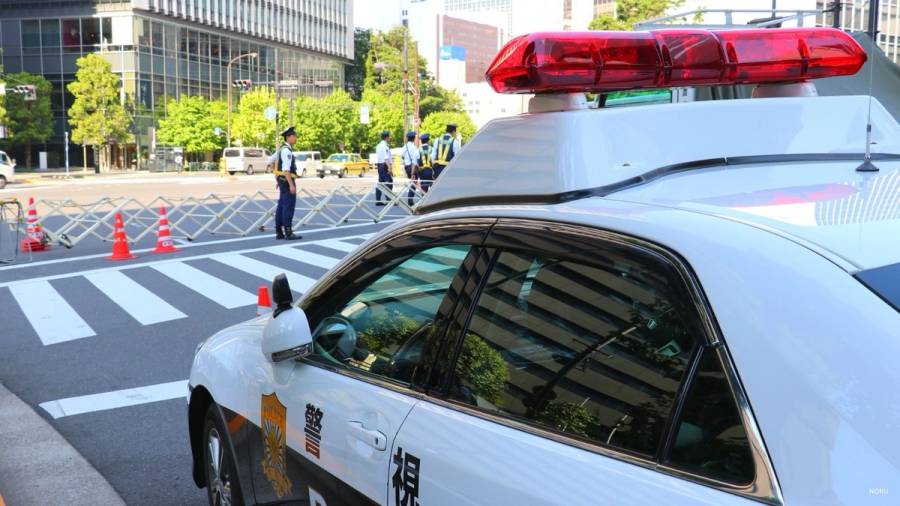
The Blue Ticket (青切符, ao-kippu) is an on-the-spot fine system modeled on how traffic violations are already handled for car drivers. A police officer stops you for a violation, issues a blue citation slip, and you pay a fixed fine within eight days at a bank or post office. No criminal record. No court appearance. No interview at a police station.
The system covers 113 specific violations and applies to all cyclists aged 16 and older. That includes foreign tourists. Nationality makes no difference under Japanese road traffic law.
Serious offenses sit outside the blue ticket system entirely. Drunk cycling, dangerous obstruction, and causing an accident still go directly to red ticket criminal proceedings. Drunk cycling carries a potential fine of up to ¥1 million or five years in prison. These penalties were introduced in late 2024 and are already in effect.
The blue ticket fills the space between a warning and a criminal charge. It is a middle-tier tool and the most likely thing to affect a tourist who makes an honest mistake.
If a blue ticket goes unpaid past the deadline, the case escalates to criminal proceedings. Fines are cash only, paid at a bank or post office using the payment slip attached to the ticket.
What the Fines Actually Cost
The fine range for blue tickets sits between ¥3,000 and ¥12,000. Using a phone while riding carries the highest penalty in this tier.
There are over 100 violations in total, but these are the ones most likely to affect a tourist who is unfamiliar with local cycling rules.
The Violations That Catch Tourists Off-Guard
Several of these violations trip up visitors because Japan's traffic rules differ from what people expect.
Japan drives on the left. Bicycles follow the same rule — keep to the left side of the road and travel in the same direction as traffic. Riding against the flow of cars is common in some countries and feels safer to some riders. In Japan it is a fineable offense and creates a genuine hazard on narrow streets, where oncoming cyclists and drivers have almost no reaction time.
The phone violation is the one tourists are most likely to commit without thinking. Navigating an unfamiliar city by checking Google Maps every two minutes is normal visitor behavior. On a bike, it now costs ¥12,000. Plan your route before you set off, take a screenshot of the map, or pause and pull over to check directions. Holding the phone while moving is what triggers the fine.
Riding an umbrella is seen frequently in Japan, mostly on old-style city bikes moving slowly through residential streets. Many visitors assume it is legally fine because locals do it. It is now a ¥5,000 violation.
Sidewalk cycling is a grey area worth understanding carefully. Technically, bicycles belong on the road in Japan. In practice, many Japanese cyclists ride on pavements and police had historically allowed it. Under the new system, simply being on a pavement is not automatically a fine. Riding fast on a pavement, forcing pedestrians to move out of the way, or startling walkers is. The enforcement focus is on behavior that creates real danger, not on presence on a sidewalk.
This nuance matters in Kyoto specifically. The city's older streets are narrow. Some areas have no dedicated cycling lane at all. Riding sensibly and reading your surroundings is not just legal advice, it is how most locals navigate the city safely.

Helmets: Required or Not?
Helmet use is currently a legal duty of effort (努力義務) for all cyclists. It is strongly encouraged by law but not yet subject to a fine. You will not receive a blue ticket for riding without one.
That said, Metropolitan Police data shows approximately half of cyclists killed in 2024 suffered fatal head injuries. The fatality rate for unhelmeted cyclists is about 1.4 times higher than for those wearing helmets. On NORU tours, helmets are provided and wearing them is required.
What Changed for Drivers
The April 2026 changes are not only about cyclists. Drivers now face fines of ¥5,000 to ¥9,000 if they fail to maintain a safe passing distance when overtaking a bicycle. If a driver cannot keep sufficient lateral space, they must slow down before passing. This mirrors road-sharing rules used across most of Europe.
From September 2026, residential roads without a centreline will have a statutory speed limit of 30 km/h for all vehicles. A large number of Kyoto's backstreets, where NORU tours usually take place, fall into this category. The change should make neighborhood riding noticeably calmer for anyone on a bicycle.
Cycling in Kyoto With the New Laws in Mind
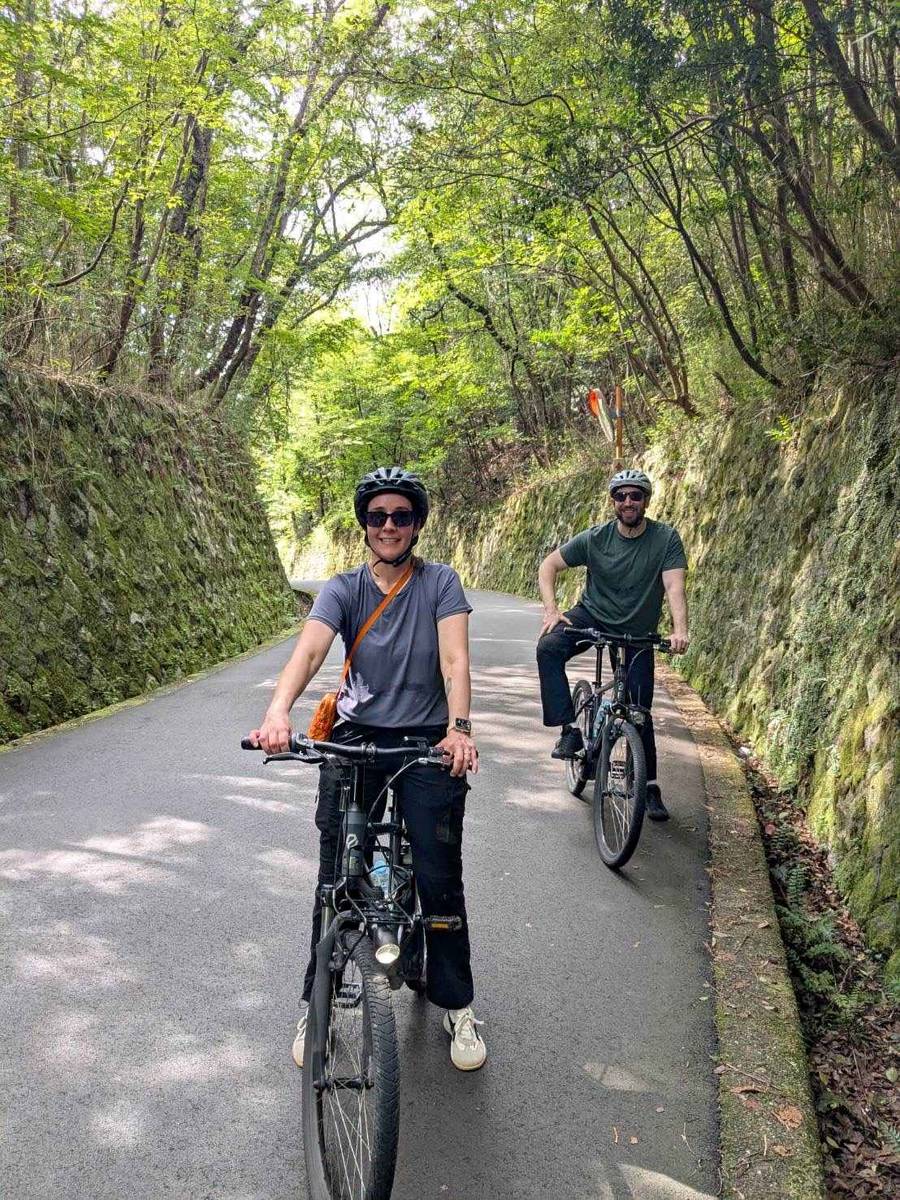
Kyoto is one of Japan's most accessible cities for cyclists. The central districts are mostly flat. The city has a well-established rental network, and the official Kyoto City cycling guide has been updated to include an English-language PDF on the new blue ticket system, written specifically for tourists.
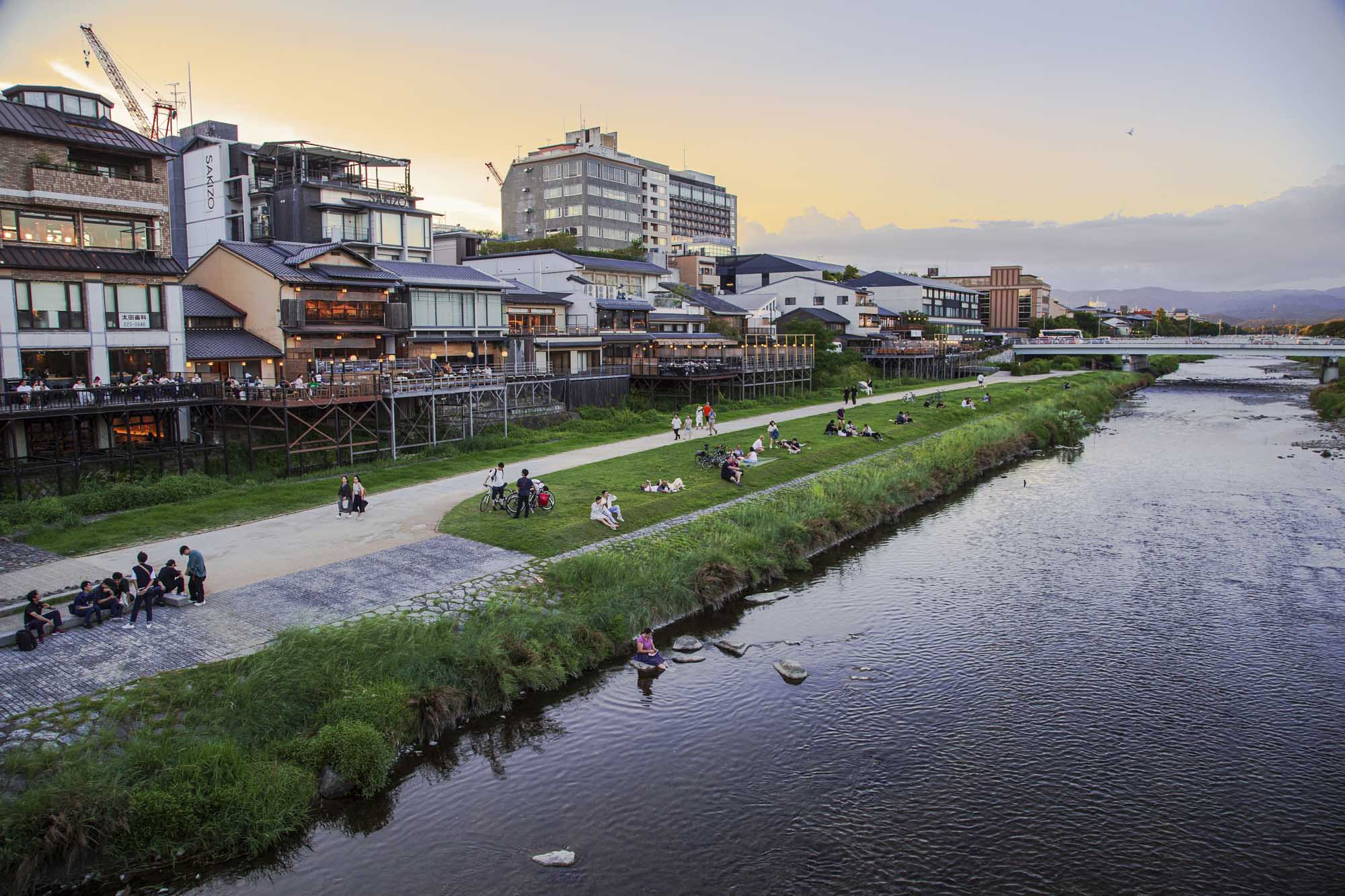
The routes most popular with visiting cyclists — the Kamo River path, the backstreets around Gion, and the approach roads into Arashiyama — are generally well-signposted and manageable for first-time riders. The rules are straightforward once you know them.
The National Police Agency's five core principles for safe cycling in Japan:
- Ride on the road, on the left. Use pavements only where signage explicitly permits it.
- Obey all traffic signals and stop signs.
- Use a front light at night or in low visibility.
- Never ride under the influence of alcohol.
- Wear a helmet.
Follow these and you are covering the fundamentals. The blue ticket system is not designed to trap cautious cyclists. It is aimed at the behaviors that have caused 67,000 accidents a year.
The Practical Case for a Guided Tour
Navigating Kyoto by bike as a first-time visitor takes some adjustment. The traffic runs on the left. Side streets have no cycling lanes. Intersections work differently from most Western countries. And now there is a real financial cost to getting it wrong.
On a guided e-bike tour, most of those variables are handled before you get on the bike. Your guide knows the routes, keeps the group in the correct lane, and manages stops at traffic signals. You do not need your phone out for navigation — which removes the single highest-penalty risk entirely.
NORU's Secret Kyoto tour and Arashiyama tour cover routes that run through neighbourhoods where the new rules apply. Every group is briefed on road behaviour at the start of the tour. For visitors who want to build their own route, private tours are an option.
Kyoto by bicycle is still one of the most efficient and enjoyable ways to move through the city. The new laws do not change that. They simply make clear that a bicycle is a vehicle, and riding one here carries the same basic responsibilities as anywhere else.
Frequently Asked Questions
Yes. The Blue Ticket system applies to all cyclists aged 16 and older, regardless of nationality. Foreign visitors are subject to the same on-the-spot fines as Japanese residents for violations such as phone use, wrong-side riding, and running red lights.
Using a phone while riding carries the highest Blue Ticket fine at ¥12,000. Other common fines include ¥6,000 for running a red light or riding on the wrong side of the road, and ¥5,000 for riding without lights or holding an umbrella.
Bicycles are required to use the road in Japan. Pavement cycling is permitted in limited situations. Where signage allows it, or for riders under 13 or over 70. Under the 2026 rules, slow and cautious pavement riding is unlikely to result in a fine, but riding in a way that endangers pedestrians can.
Helmets are not currently subject to a fine, but wearing one is a legal duty of effort under Japanese law. Metropolitan Police data shows unhelmeted cyclists have a fatality rate roughly 1.4 times higher than those wearing helmets. On NORU tours, helmets are provided and required.