Kyoto Cherry Blossom Season 2026: E-Bike Guide to Best Viewing Spots
I've lived in Kyoto for over 20 years. I've watched cherry blossom season change dramatically in that time. The crowds have tripled. The tour buses have multiplied. And the window to actually enjoy sakura (without fighting through hundreds of tourists) has shrunk to a few early morning hours.
That's why I stopped walking and started cycling. An e-bike doesn't just make cherry blossom season easier. It changes the experience entirely!
Why E-Bikes Are the Best Way to See Cherry Blossoms in Kyoto
You Can Go Where Buses Can't
Kyoto's most beautiful cherry blossom spots aren't on the main tourist circuit. They're down narrow lanes, along quiet canal paths, and inside temple precincts that coaches can't reach.
On an e-bike, you slip through backstreets while the tour buses sit in traffic on Higashioji-dori. You arrive at spots before the crowds do. And when a location fills up, you simply move on — no waiting, no frustration.
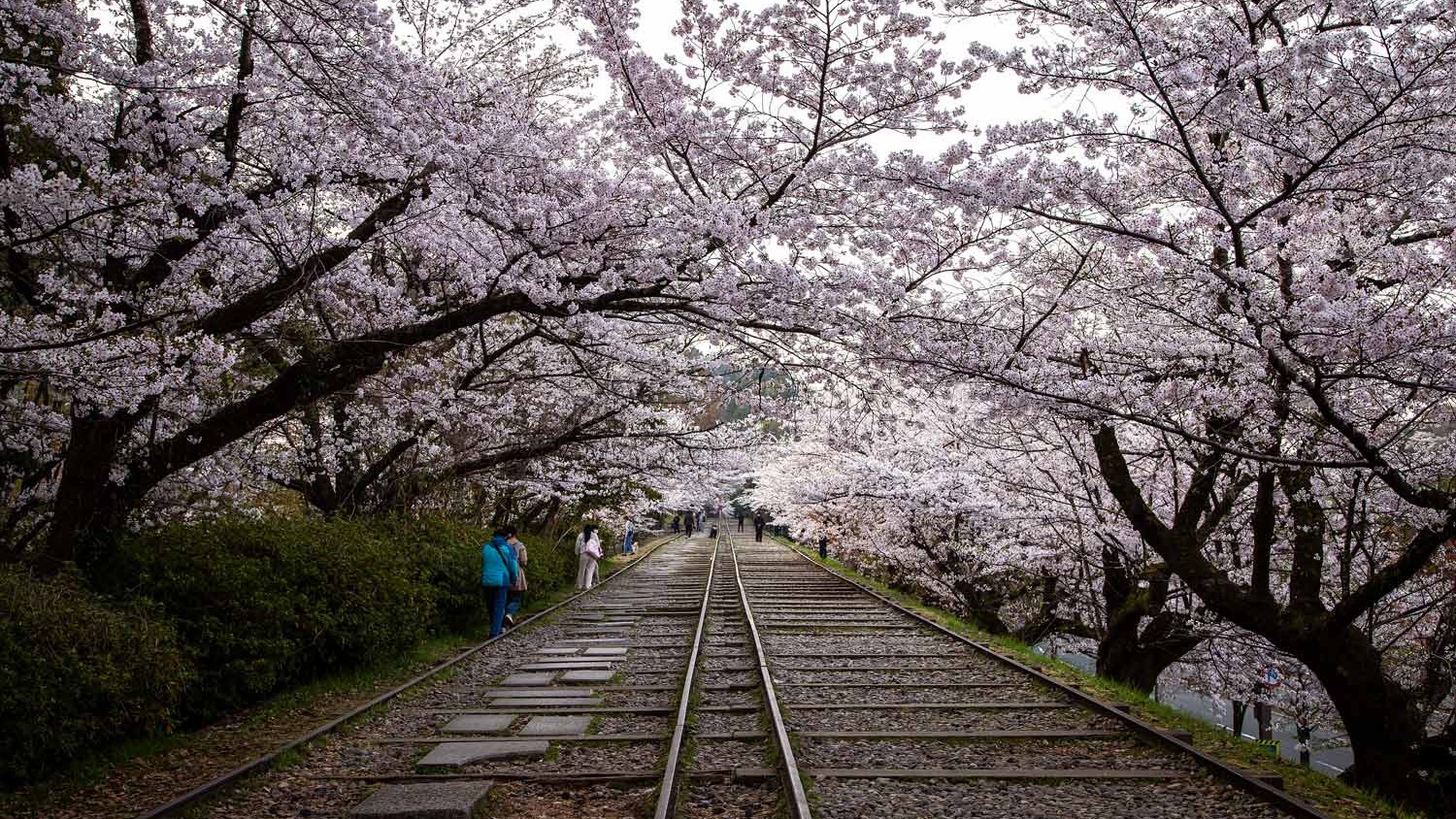
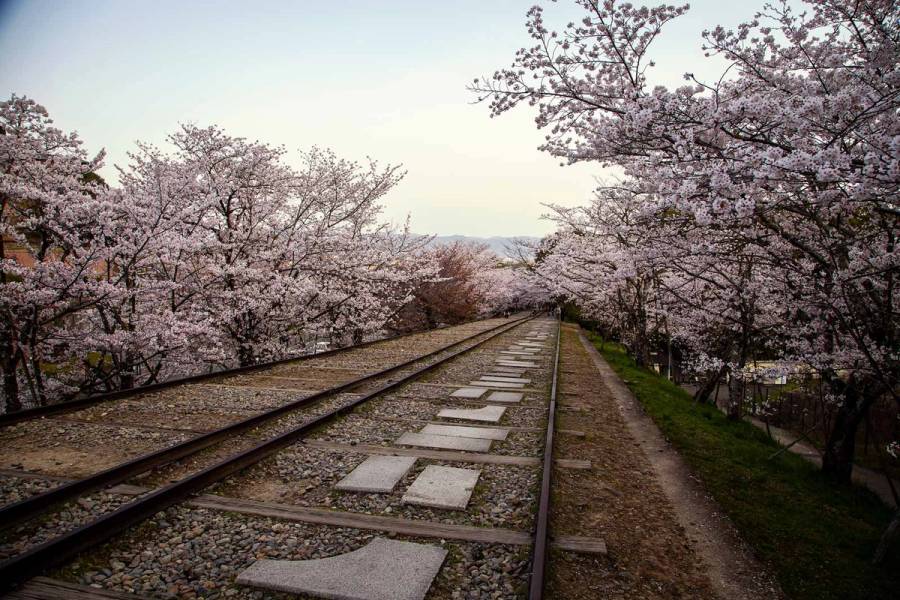
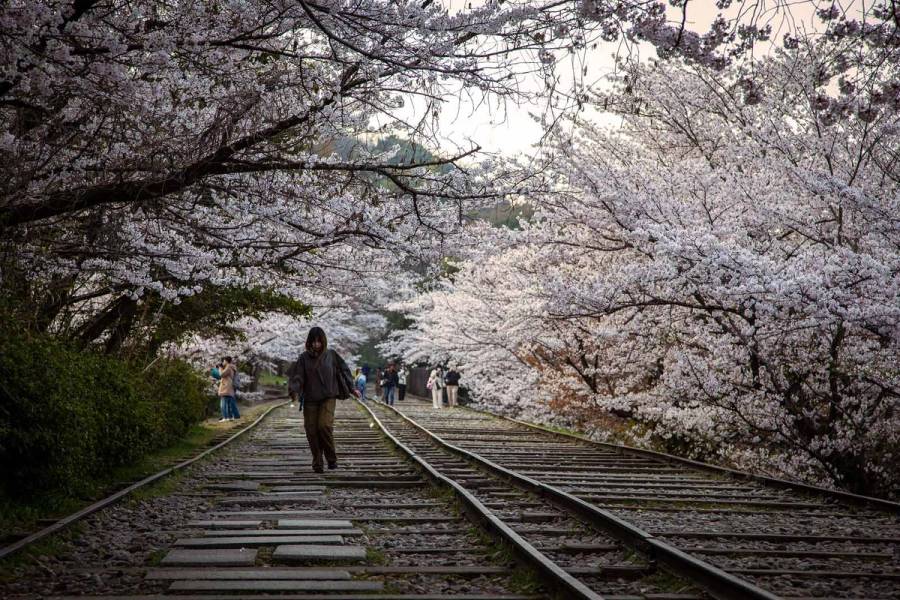
The Keage Incline is a perfect example. Former railway tracks disappear under a tunnel of cherry trees. It's one of Kyoto's most photogenic sakura spots. Most visitors never find it. On two wheels, it takes five minutes from central Higashiyama.
You Can Cover the Whole City in One Day
Kyoto's peak bloom lasts roughly ten days. On foot, you can realistically visit two or three spots well. By e-bike, you can cover the Philosopher's Path, Maruyama Park, Arashiyama, and hidden north Kyoto temples — all in a single day.
The electric assist matters here. Kyoto's hills are real. By the time walking tourists reach Kiyomizu-dera, they're exhausted. You arrive fresh, ready to actually take in what you came to see.
Japan's cherry blossom forecasts are published by the Japan Meteorological Agency from late January onwards. Check them before you book. Timing your visit around peak bloom makes an enormous difference.
The Best Cherry Blossom Spots to Visit by E-Bike
Philosopher's Path
This 2km canal-side path connects Ginkaku-ji to Nanzen-ji. Hundreds of cherry trees line the water's edge. During peak bloom, petals drift downstream like pink snow.
Come before 8am. The light is soft, the canal steams gently in the cool air, and you'll often have entire stretches to yourself. By 10am, it's packed shoulder to shoulder.
An e-bike lets you ride the parallel streets and dip in at the quietest access points. You see the whole path without fighting the crowds that slow walkers to a crawl.
Maruyama Park & Eastern Temple Circuit
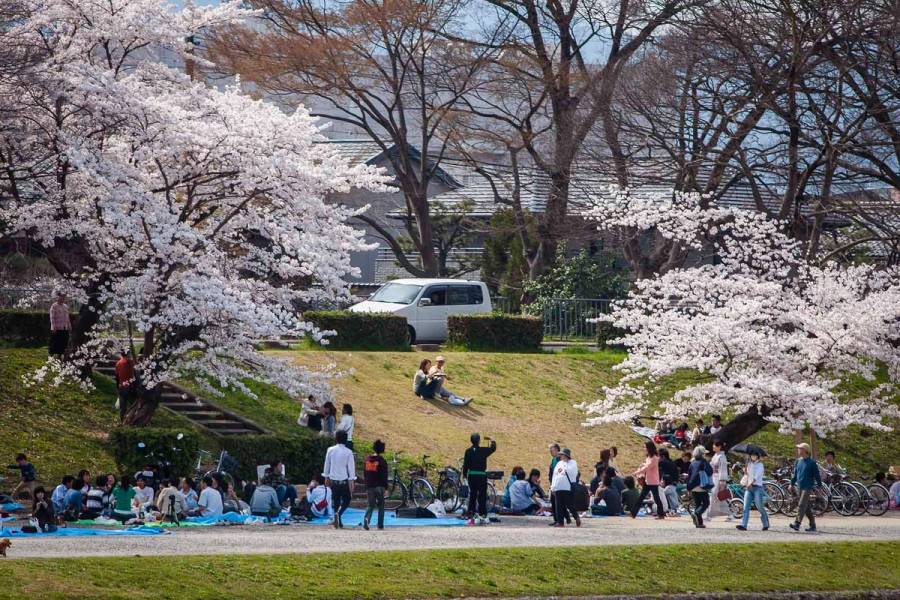
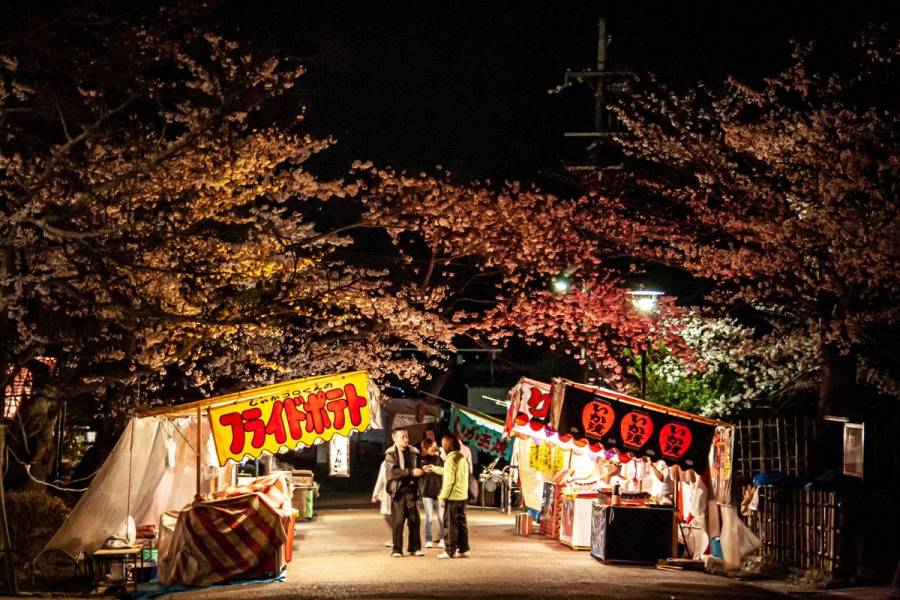
Maruyama Park is Kyoto's unofficial sakura headquarters. Over 680 cherry trees bloom across the park, including a famous weeping cherry that's illuminated every evening during the season.
From here, the eastern temple circuit unfolds naturally by e-bike: Kiyomizu-dera for panoramic views over a valley of cherry trees, Nanzen-ji for the dramatic stone gate framing blooming branches, and Heian Shrine for the weeping cherries that bloom two weeks later than everything else — extending your viewing window into mid-April.
The Kyoto City official tourism site publishes a cherry blossom map each spring. It's worth checking to see which locations are at which stage before you set off.
The Keage Incline & Okazaki Canal
These two connected spots are my personal favourites — and they're largely unknown to first-time visitors.
The Keage Incline is a former railway track preserved as a walking path. Cherry trees arch over the tracks on both sides. The perspective — railway lines vanishing into a tunnel of blossoms — is unlike anything else in Kyoto.
The Okazaki Canal runs nearby, linking Heian Shrine, the National Museum, and Nanzen-ji along a tree-lined waterway. You cycle the whole thing in under 20 minutes. Most of it is beautiful. None of it is on a standard tour itinerary.
North Kyoto vs Arashiyama: Two Completely Different Experiences
Most visitors treat Kyoto as one destination. It isn't. The north and west of the city feel like entirely separate worlds — and both are spectacular during cherry blossom season.
North Kyoto: Hidden Temples and Quiet Streets
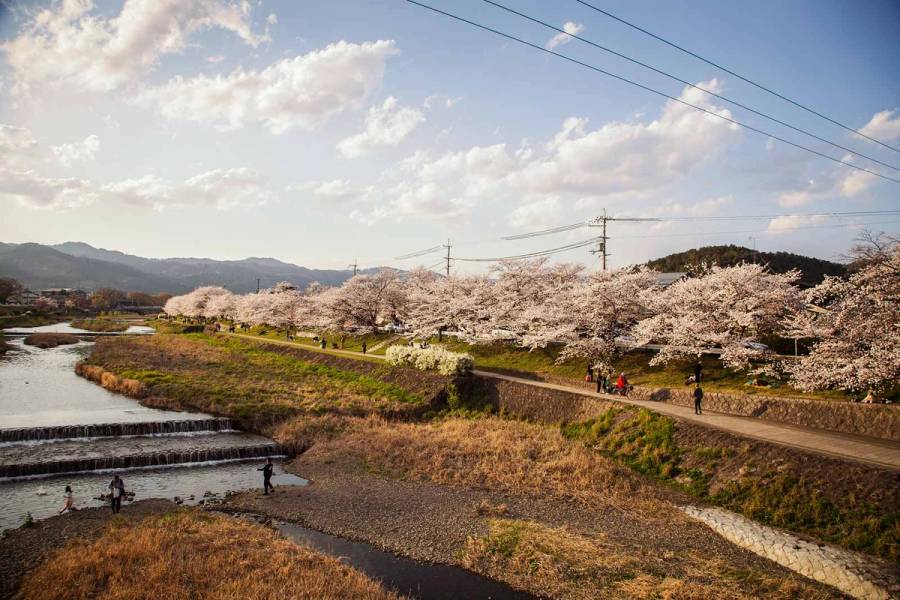
North Kyoto is where I take people who want to escape the tourist circuit entirely. The Daitokuji temple complex alone contains 22 sub-temples, most with private Zen gardens. Very few visitors make it this far north.
During cherry blossom season, the timing here is slightly later than central Kyoto. That means you can often find full bloom in the north when everywhere else has passed peak. It's a useful buffer if your trip dates don't align perfectly with the main forecast.
Our Secret Kyoto E-Biking Tour covers north Kyoto in depth — 3h45m, max 8 guests, ¥15,000 per person. Temple entrance fees and a bilingual guide are included.
👉 Book the Secret Kyoto E-Bike Tour →
Arashiyama: Mountains, Bamboo, and River Views
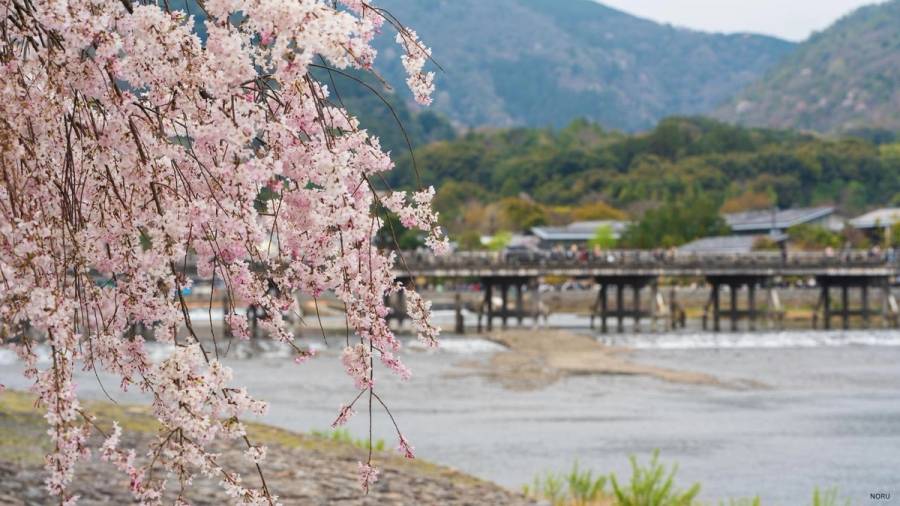
Arashiyama is different. It's bigger, wilder, and more dramatic. The Hozu River reflects cherry trees against mountain backdrops. The bamboo grove creates a striking contrast — green columns against pink blossoms as you emerge from the forest into the riverside gardens.
Arashiyama blooms 2-3 days earlier than central Kyoto due to its western mountain microclimate. If you're visiting in late March, start here.
Our Arashiyama E-Biking Tour runs 4+ hours, covers the bamboo grove, Togetsukyo Bridge, and hillside temples, max 8 guests, ¥15,000 per person.
👉 Book the Arashiyama E-Bike Tour →
Practical Tips for Cherry Blossom Season
When to Go (and What to Avoid)
The worst time to visit popular spots is 11am–2pm. Tour buses arrive, school groups descend, and the experience becomes about crowd management rather than cherry blossoms.
Go early. Most temples open at 6am during bloom season specifically for this reason. The light is better, the air is still, and the reflections in temple ponds are perfect.
Late afternoon from 4pm onwards is also good. Crowds thin as tours end, the light turns golden, and many locations run evening illuminations that transform the atmosphere entirely.
Families and Private Groups
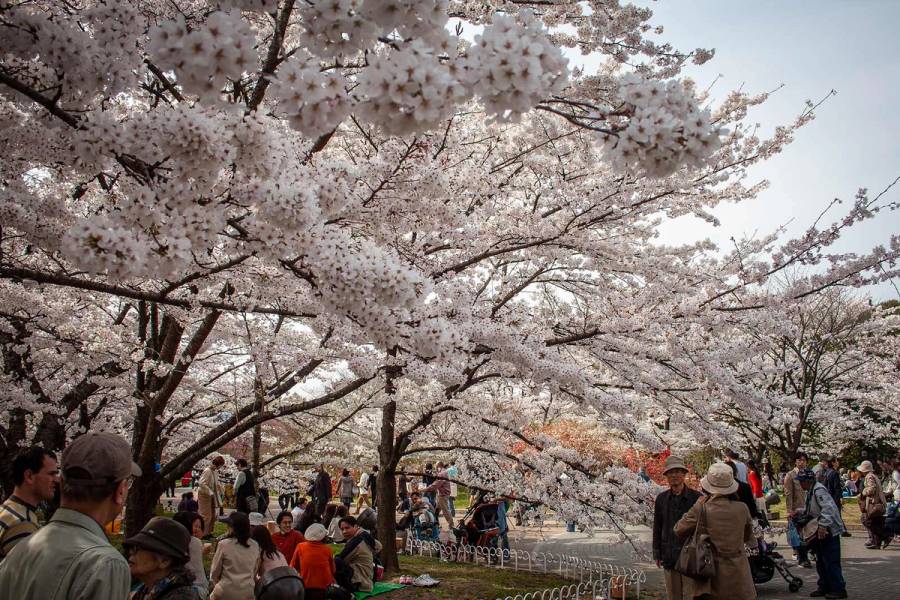
Standard tours require riders to be 13+. If you're travelling with younger children or want a fully custom route, our Private Tours are the answer. Flexible duration, all ages welcome, and we plan the route around what matters to your group.
Cherry blossom season is one of our most popular times for private bookings — if you're planning a family trip during sakura season, book well in advance.
👉 Enquire About a Private Tour →
What to Bring
You don't need much. We provide premium e-bikes, helmets, safety gear, temple entrance fees, water, and a bilingual guide.
Bring layers — spring mornings in Kyoto are cool, and the temperature drops again after sunset. A small camera or fully charged phone is all you need for photos. And comfortable shoes. That's it.
The Honest Truth About Cherry Blossom Season
Sakura season is crowded. That's just reality. The question isn't how to avoid it — it's how to experience it on your own terms.
An e-bike gives you that. The freedom to arrive before the crowds, move when a spot fills up, and discover the places that tour buses can't reach. After 5,000+ guests and 20 years of guiding in Kyoto, I can tell you that the people who enjoy cherry blossom season most aren't the ones who plan the most. They're the ones who stay flexible — and keep moving.
We'd love to show you our Kyoto. Check which tour fits your trip →
Frequently Asked Questions
The optimal window is typically late March through early April, when most trees reach full bloom — though exact timing shifts by one to two weeks depending on the year's winter temperatures. Different varieties bloom across a much longer period, with early bloomers like Kawazu-zakura appearing in late February and weeping cherries at Heian Shrine often peaking in mid-April. Check the Japan Meteorological Corporation's annual forecast from February onwards for that year's specific predictions.
Yes, e-bikes can reach virtually all major viewing spots, with bike parking available at temples and parks. Some temple grounds require walking the final approach, but e-bikes dramatically improve mobility between locations.
With an e-bike, you can realistically visit 8-12 major spots in a full day, compared to 3-4 on foot. The key is strategic routing and early morning starts to beat crowds.
Monitor real-time bloom reports from mid-March onwards. The Japan Meteorological Corporation and major travel sites publish daily updates as the season approaches. Different varieties bloom at different times, so early or late bloomers like Heian Shrine's weeping cherries can extend your viewing opportunities well beyond the main peak. E-bike flexibility lets you adapt quickly to changing conditions, shifting focus between districts that bloom at different elevations and microclimates throughout the season.