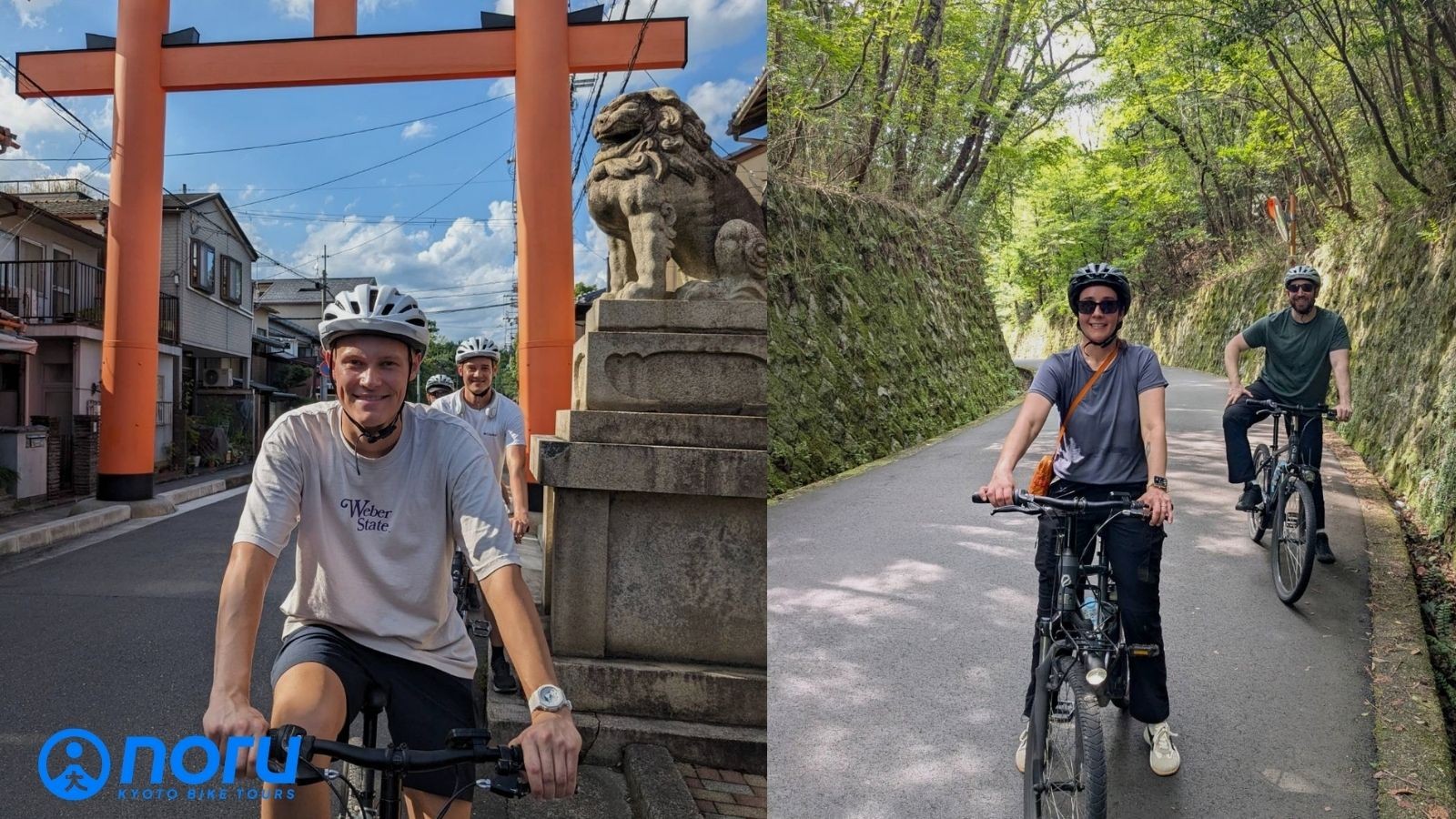
Why Choose an E-Bike Tour Over Walking Tours in Kyoto?
Discover why electric bike tours help you see 3x more of Kyoto with less fatigue. A data-driven comparison for planning your perfect Kyoto experience.
1. Why Your Choice of Tour Type Matters in Kyoto
Kyoto is home to 17 UNESCO World Heritage Sites spread across more than 20 kilometers. These temples, shrines, and castles are not grouped in one area. They stretch from Kamigamo Shrine in the north to Daigo-ji Temple in the south. This means how you choose to explore the city will shape your entire experience.
Walking tours have been popular for years. But a new option is changing how visitors experience Kyoto: electric bike tours. E-bikes use a motor that helps you pedal. This means you can travel farther without getting tired.
In this guide, we compare e-bike tours and walking tours using real data. We'll show you why e-bike tours—like those offered by NORU Kyoto Bike Tours—help you see more of this ancient city while staying fresh and energized. For a complete overview of cycling in Kyoto, see our Complete Guide to Kyoto Bike Tours.
2. E-Bike Tour vs Walking Tour: Quick Comparison
3. The 7 Reasons E-Bike Tours Beat Walking Tours in Kyoto
Reason 1: Cover 3x More Ground in the Same Time
The biggest advantage of e-bike tours is distance. Research shows that most walking tours cover 3 to 8 kilometers in 2 to 4 hours. That's about one neighborhood in Kyoto.
E-bike tours cover 14 to 24 kilometers in similar time. NORU's Secret Kyoto tour covers 14 km in under 4 hours. Their Arashiyama tour covers 24 km.
What this means for you: On a walking tour, you might visit Gion and Kiyomizu-dera. On an e-bike tour, you could add the bamboo groves of Arashiyama, hidden temples, and local neighborhoods that most tourists never see. For detailed route planning, check out our Guide to Exploring Kyoto by Bicycle.
With Kyoto's 17 UNESCO sites spread across the city, an e-bike lets you connect the dots that walking simply cannot.
Reason 2: Reduce Physical Fatigue by Up to 69%
E-bikes use pedal-assist technology. The motor helps as you pedal, but you're still exercising. A 2023 study in ScienceDirect found that e-bikes reduce power output by about 69% compared to regular cycling.
This doesn't mean you're not moving. According to research published in the International Journal of Behavioral Nutrition and Physical Activity, e-cycling still provides moderate-intensity physical activity with health benefits.
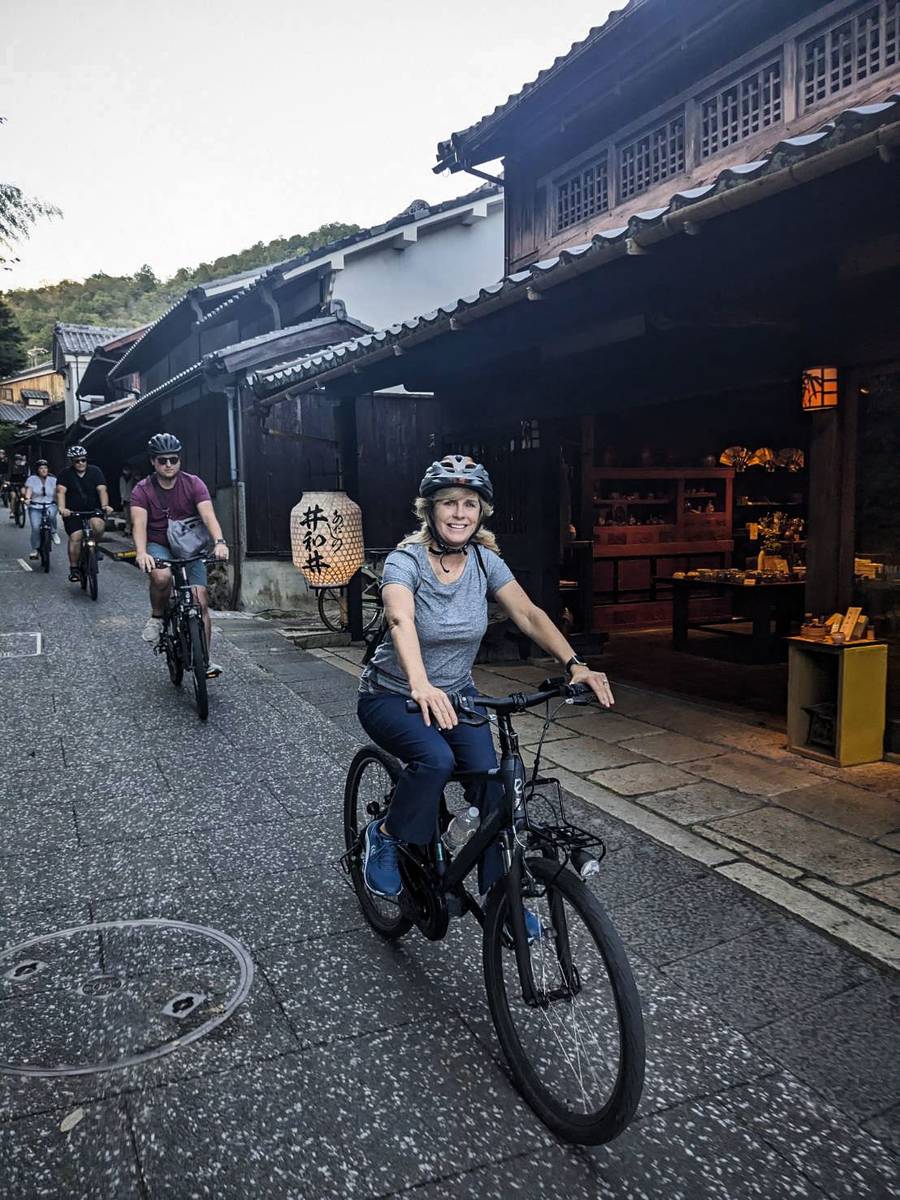
Why it matters: You arrive at each temple fresh and ready to explore. No sore feet. No need to find a bench. You have energy to climb the stairs at Kiyomizu-dera and still enjoy the rest of your day.
Walking 8 to 10 miles on foot—which is common for tourists—often leads to burning feet, swollen ankles, and exhaustion by mid-afternoon.
Reason 3: Beat Kyoto's Brutal Summer Heat
Kyoto summers are famously harsh. The city sits in a basin surrounded by mountains. This traps heat and humidity. Summer temperatures regularly exceed 35°C (95°F), and humidity makes it feel even hotter.
According to Kyoto Tourism's official guide, the summer heat can be intense in the city streets. They recommend travelers carry water and a fan.
How e-bikes help: When you ride, you create your own breeze. The motor does the hard work, so you're not sweating through uphills. You can cover more ground during cooler morning hours and rest in air-conditioned cafes during peak heat—something that's harder to do on a walking tour with a fixed pace.
E-bikes also extend your comfortable travel radius from about 5 km on foot to 15 km or more, according to research published in the Journal of Physiology.
Planning your visit around the weather? Read our complete guide to the Best Time to Bike in Kyoto for seasonal tips and recommendations.
Reason 4: Access Kyoto's True Hidden Gems
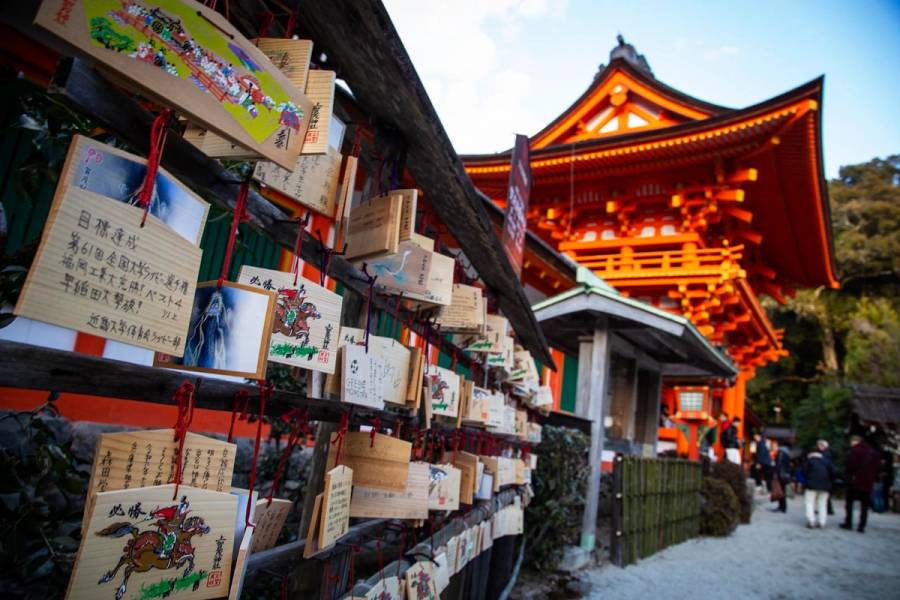
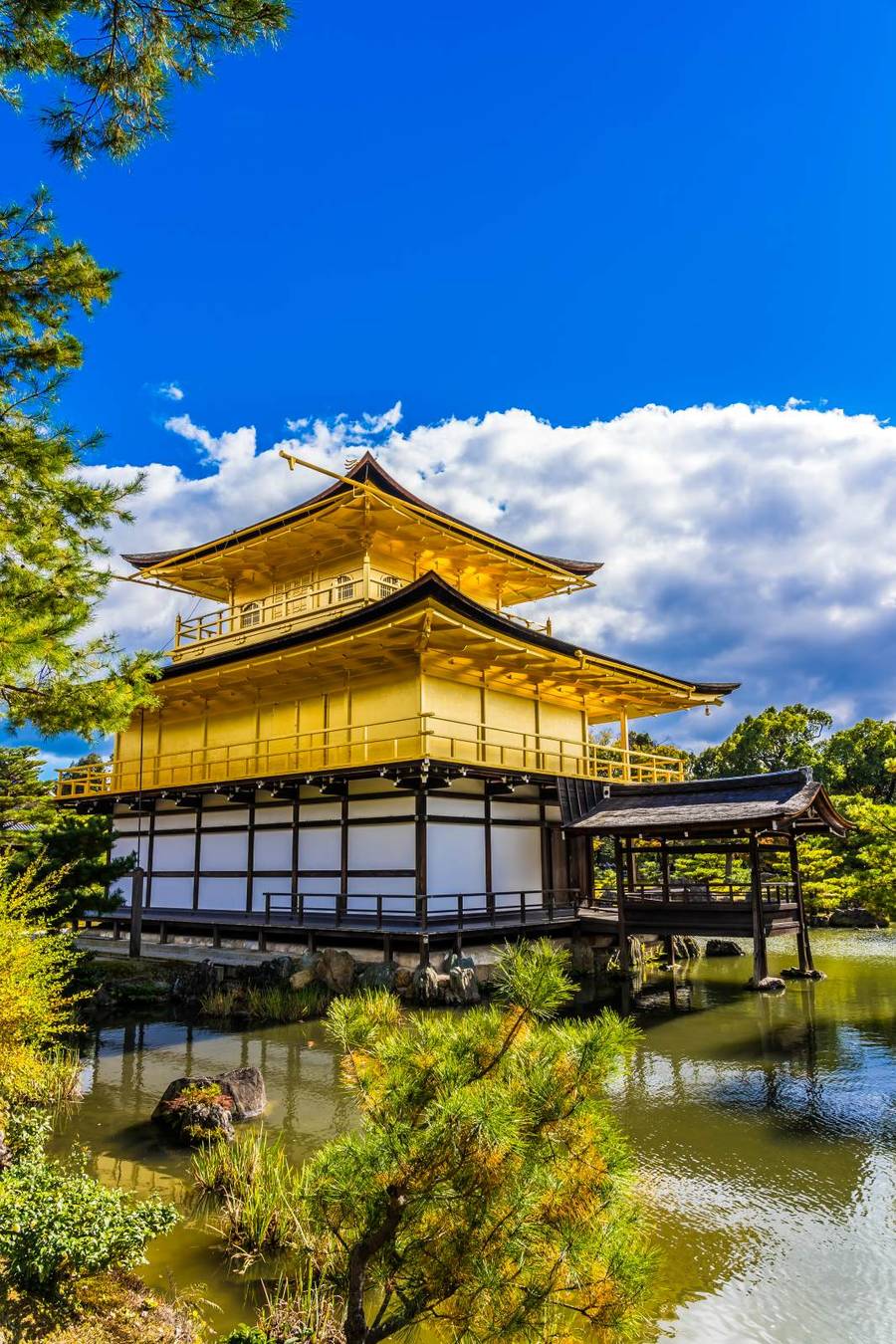
Tour buses and walking groups stick to the same popular routes: Kinkaku-ji, Fushimi Inari, Gion. These places are beautiful but crowded.
The real magic of Kyoto lies in places most tourists never reach:
- Quiet neighborhood shrines with no other visitors
- Local shopping streets where residents actually shop
- Traditional machiya houses along the Kamo River
- Secret viewpoints that don't appear on tourist maps
These spots are often 5 to 10 kilometers from the city center. Walking there and back would take your entire day. But on an e-bike, they're just 20 to 30 minutes away.

NORU's advantage: With 20 years of living in Kyoto, NORU's guides know these hidden locations. They take you where guidebooks don't go. This kind of local knowledge from experienced Kyoto guides is something you simply cannot access on a standard walking tour.
Research confirms that e-bike tourists can reach sites not accessible to untrained walkers, while still moving slow enough to appreciate the scenery.
Reason 5: Tours for All Ages and Fitness Levels
Walking tours work best for people who are already fit. A typical tour involves 3 to 4 hours of continuous walking on hard pavement. For older adults, families, or anyone recovering from injury, this can be difficult or impossible.
E-bikes level the playing field. The motor adjusts to your needs. Pedal harder when you want exercise. Let the motor help when you need a break.

Who can join an e-bike tour?
- Ages 13 and up (NORU's minimum age)
- Older adults who haven't biked in years
- People with joint issues who can't handle long walks
- Families with different fitness levels
- Anyone who wants to enjoy the tour, not endure it
According to research from the European Cyclists' Federation, 42% of German cycle tourists now use e-bikes for their holidays. The technology is making cycling tourism accessible to more people than ever before.
Reason 6: Better Value for Your Limited Time
Most visitors to Kyoto have 2 to 3 days. That's not much time when you consider the city has centuries of history spread across dozens of neighborhoods.
Walking tour reality:
- 5–8 km covered
- 2–4 sites visited
- Need multiple tours to see different areas
- Significant time walking between locations
E-bike tour reality:
- 14–24 km covered
- 8–12 sites visited (including stops for photos and exploration)
- One tour can span multiple neighborhoods
- Quick transitions between sites, more time actually exploring
The math is simple. If you cover 3x the distance, you can see 2–3x more sites. And because you're not exhausted, you actually remember and enjoy what you see.
E-bike tourism is growing rapidly. A 2024 industry report found that 64% of cycling tour operators now offer e-bike options, up dramatically from just a few years ago. The reason? Customers are seeing better value.
Reason 7: More Fun, Better Memories
Let's be honest: after 3 hours of walking, you're not thinking about temple history. You're thinking about your feet.
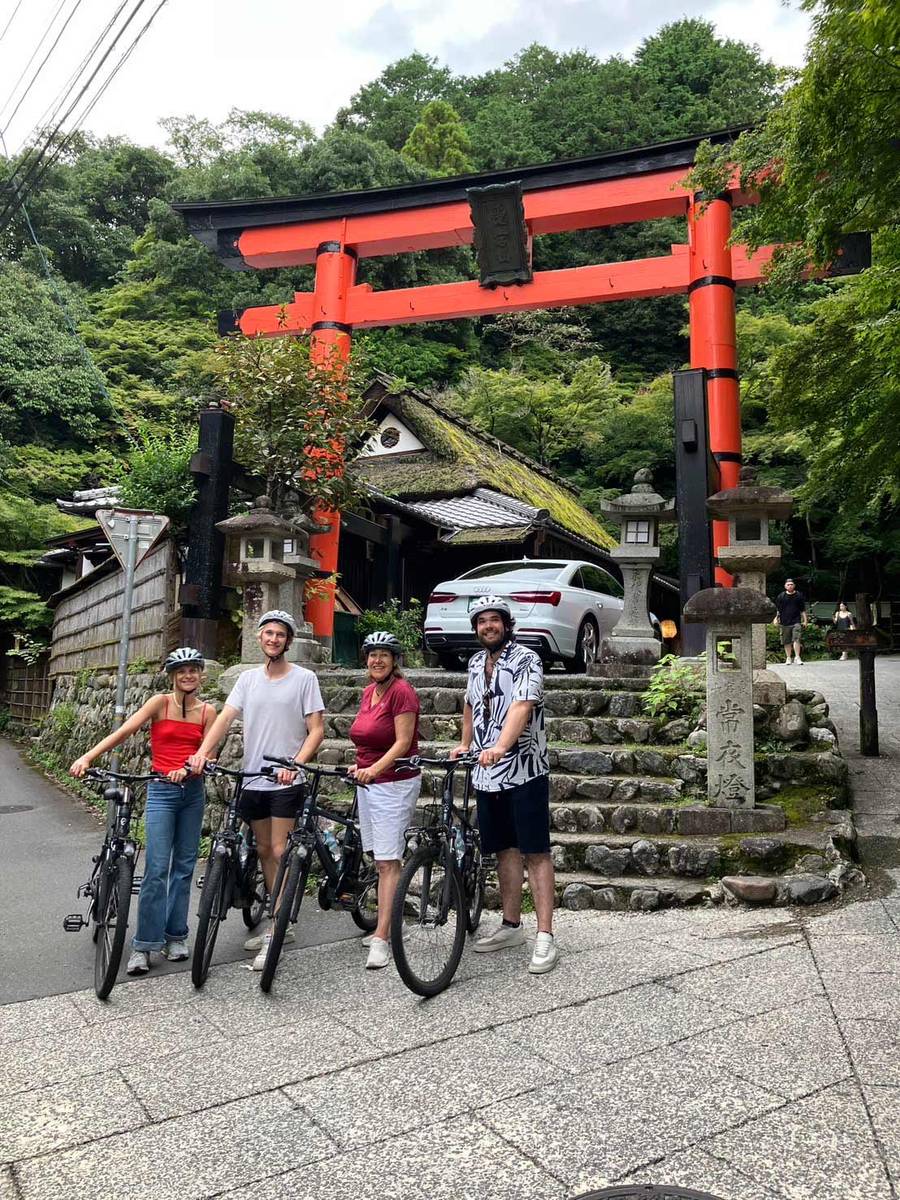
E-bike tours are simply more enjoyable. You're moving through the city with the wind in your hair. You stop when something catches your eye. You take photos without worrying about holding up the group.
Studies show that e-biking improves mental well-being. Riders report feeling joy and connection with their environment. The gentle exercise releases endorphins without the stress of overexertion.
What our research shows: Research published in MDPI Sustainability found that the main factor driving e-bike tourism was "enjoying nature and landscape." E-bikes let you focus on the experience, not the effort.
When you look back at your Kyoto trip, you'll remember the moments—the light through the bamboo, the surprise of finding a hidden garden, the taste of matcha at a local café—not the ache in your legs.
4. E-Bike Tours: A More Sustainable Way to Explore
Beyond personal benefits, e-bike tours are better for Kyoto itself. Unlike tour buses that contribute to traffic and emissions, e-bikes have zero emissions. They're quiet, don't require parking lots at temples, and help spread visitors across the city rather than concentrating them at a few crowded spots.
Kyoto has been working to become more bicycle-friendly, with dedicated cycling paths and bike-priority zones. By choosing an e-bike tour, you're supporting this vision of a more livable city.
For more on how cycling tourism benefits local communities and the environment, read our guide to Sustainable Tourism in Japan.
5. When a Walking Tour Might Be Better
E-bike tours aren't for everyone. Consider a walking tour if:
- You want deep cultural immersion in one area: Walking tours in Gion or Higashiyama let you absorb every detail of a single neighborhood
- You're traveling with very young children: Kids under 13 typically can't join bike tours
- You prefer a slower, meditative pace: Some visitors want to walk as a form of mindfulness
- You have never ridden a bike: While e-bikes are easy, basic cycling ability is required
6. Why Choose NORU for Your Kyoto E-Bike Tour
NORU Kyoto Bike Tours stands apart from typical tour companies:
20 Years of Local Knowledge NORU's founder has lived in Kyoto for two decades. This isn't surface-level tourism knowledge—it's deep understanding of neighborhoods, seasonal changes, and places that never make it into guidebooks. Learn more about what makes a local guide experience different.
Small Group Sizes Unlike crowded walking tours with 20+ people, NORU keeps groups small. This means personalized attention and flexibility to adjust the route based on your interests.
Premium E-Bikes Quality equipment matters. NORU uses reliable e-bikes with strong batteries that easily handle Kyoto's hills and distances.
Two Signature Routes
Private Tours Available For families or groups wanting a customized experience, NORU offers private tour options. Contact NORU for details.
7. Final Verdict: E-Bike Tours Win for Most Visitors
If you want to:
- See more of Kyoto in limited time
- Stay comfortable in summer heat
- Visit hidden gems beyond tourist areas
- Keep your energy for evening activities
- Travel with people of different fitness levels
Then an e-bike tour is clearly the better choice.
Walking tours have their place for deep-dive exploration of a single neighborhood. But for most visitors trying to experience Kyoto's full magic, e-bikes offer more value, more comfort, and more memories.
Ready to explore Kyoto the smart way?
Book your NORU E-Bike Tour today and discover why thousands of visitors are choosing e-bikes over walking tours.
Related Articles
- The Complete Guide to Kyoto Bike Tours: Everything You Need to Know
- Best Time to Bike in Kyoto: A Seasonal Guide
- Why Kyoto is Japan's Most Bicycle-Friendly City
- Guide to Exploring Kyoto by Bicycle
- Sustainable Tourism in Japan: How E-Bikes Are Making a Difference
This article is part of NORU's Complete Guide to Kyoto Bike Tours series. For more information about cycling in Kyoto, visit noru.cc.
Frequently Asked Questions
E-bike tours typically cover 14–24 km, while walking tours cover only 5–8 km. This means you can visit 2–3x more temples, shrines, and neighborhoods on an e-bike tour in the same amount of time.
Yes. E-bikes are designed for all fitness levels, including people who haven't cycled in years. The pedal-assist motor does the hard work, making hills easy and reducing physical strain by up to 69% compared to regular cycling.
Kyoto summers exceed 35°C with high humidity. E-bikes create a cooling breeze as you ride, and the motor prevents overexertion. You can cover more ground during cooler morning hours and take breaks without falling behind a group.
Yes. E-bikes level the playing field because each rider controls their own pedal assistance. Fitter riders can use less motor support while others use more, allowing everyone to enjoy the tour together without anyone struggling.