Most travel guides suggest skipping Kyoto in summer. Too hot, too humid, too hard. After the many Kyoto summers I've lived through, I understand why they say that. I also know they are missing something.
Summer clears out the hesitant visitors. The lush green season brings festivals that have run for over a thousand years. The city slows down during the middle of the day and comes alive in the early mornings and evenings. On an e-bike, the heat is a problem you can actually manage.
What Summer in Kyoto Actually Feels Like
Kyoto sits in a basin surrounded by mountains on three sides. This matters in summer. The mountains trap heat and humidity. There is no sea breeze. On a typical August afternoon, the temperature sits between 33 and 36 degrees Celsius, and the humidity makes it feel hotter.
Japan Meteorological Agency data shows August is the hottest month, with overnight lows rarely dropping below 25 degrees. June brings the rainy season, which runs until mid-July. July is when the Gion Festival takes over the city for a full month. August is the hottest but also the quietest in terms of tourist numbers.
The upside of summer that nobody talks about: the crowds thin out. Spring and autumn draw the biggest visitor numbers. Summer tourists tend to be shorter-stay and clustered around specific festivals. Outside those windows, popular temples are quieter than you would expect. Bamboo in Arashiyama is at its greenest. Temple gardens are lush. The city looks different in this season, and most visitors never see it.
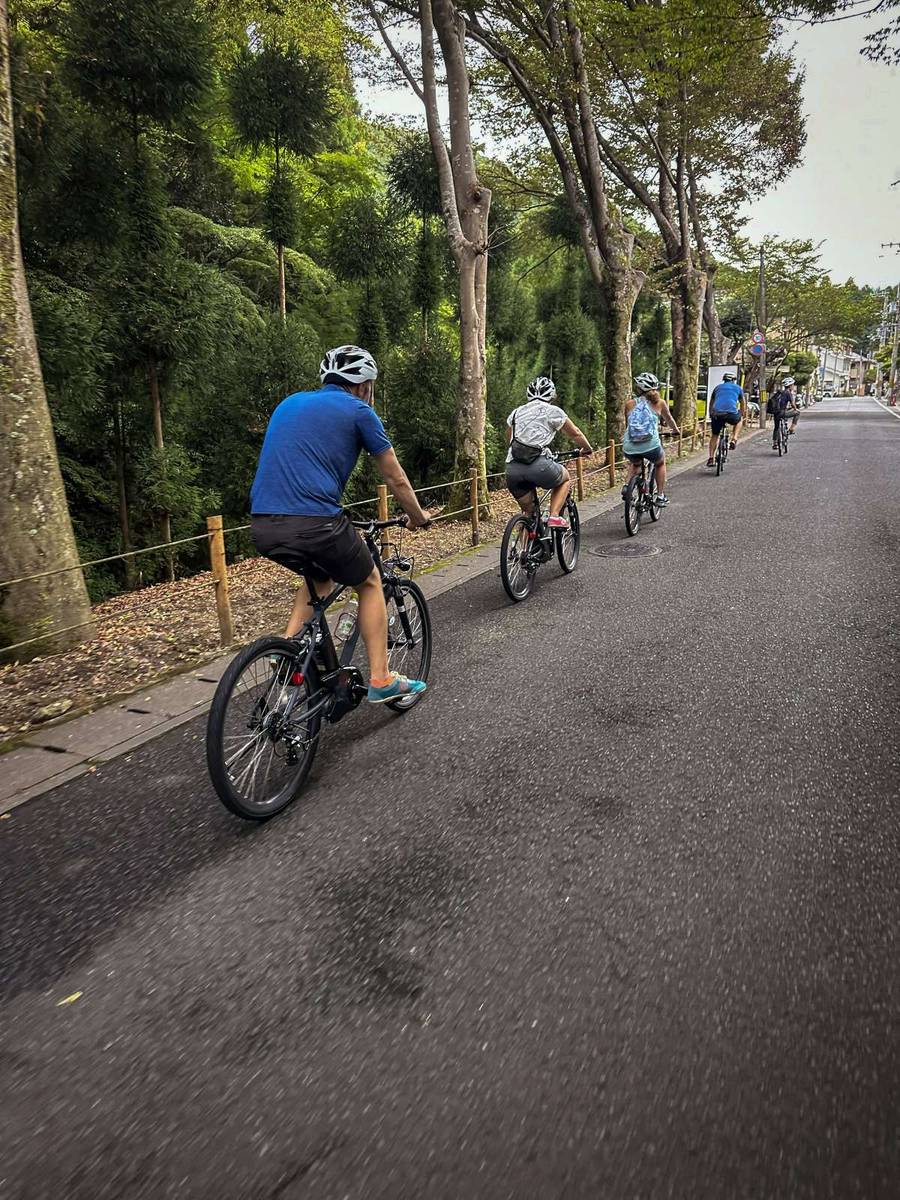
Why E-Bikes Change the Equation
Walking through Kyoto in 34-degree heat is hard work. A standard bike tour is not much better. You arrive at each temple already sweating, then stand in full sun while a guide talks.
An e-bike changes this in a few specific ways:
- Riding creates airflow. Even at a gentle pace, the movement drops the perceived temperature.
- The motor means you are not working hard enough to overheat on flat stretches. You arrive at stops cooled down, not heated up.
- You can start early, cover ground quickly, and rest during peak heat without falling behind the group.
For a full comparison of distance and comfort differences, see why e-bikes beat walking tours in Kyoto's summer heat.
Timing Your Summer Ride
When you ride matters more than where you ride. This is the most important thing to understand about summer cycling in Kyoto.
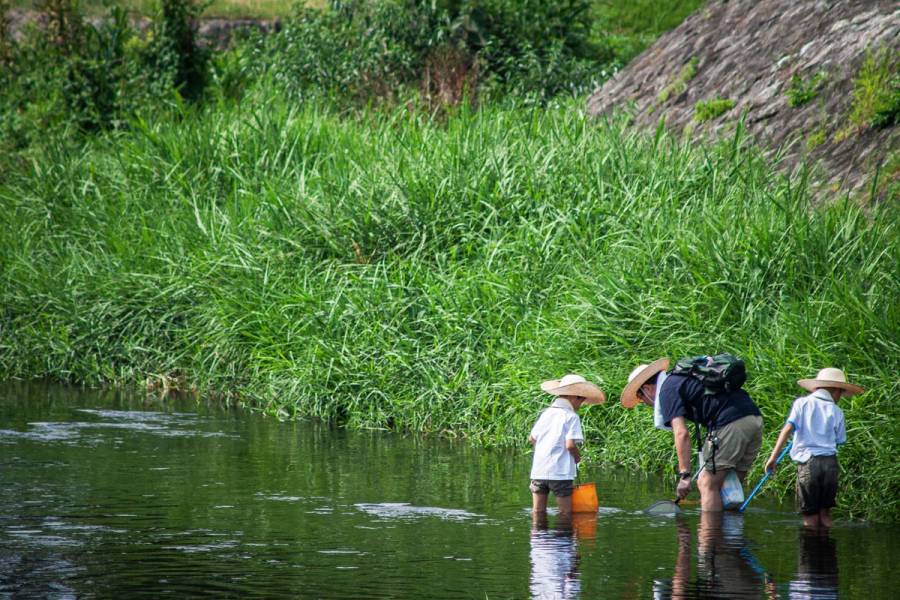
NORU tours depart at 9am — timed to move through the warming hours before peak heat and finish well before midday. It is the same window locals choose, with the added advantage of someone who knows every shaded back street in the city.
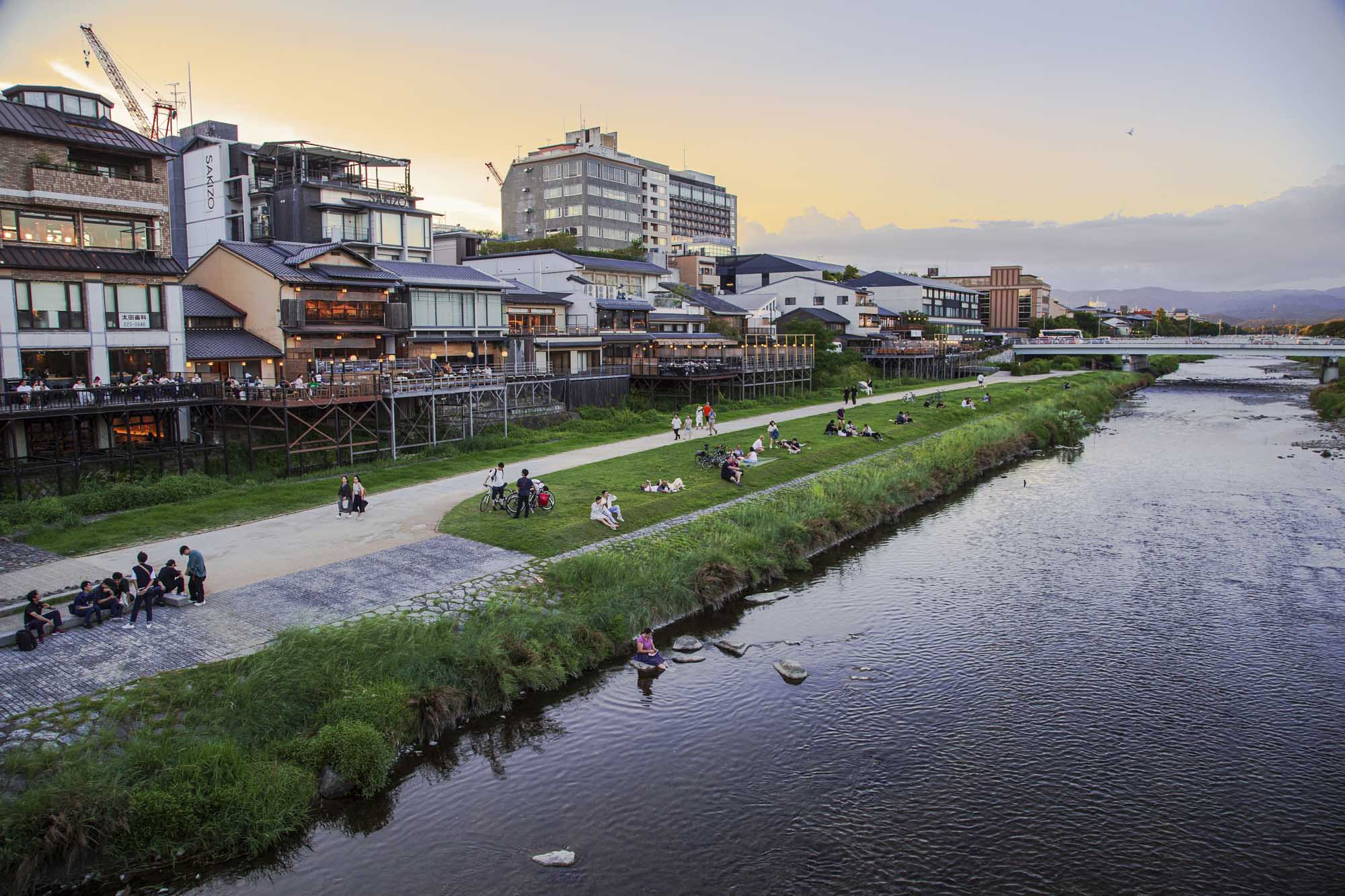
Routes are planned to move through shaded areas, riverside paths, and tree-lined streets wherever possible. The Kamo River corridor, for example, runs 2 to 3 degrees cooler than central city streets. That is not trivial when the baseline is 35 degrees.
For a full look at conditions across all seasons, see the complete seasonal guide to Kyoto cycling.
What to Pack
Summer in Kyoto requires a little preparation. The full packing guide for Kyoto bike tours covers gear in detail. For summer specifically:
- Breathable, light-coloured clothing. Synthetic or linen, not denim.
- A hat or cap that fits under a helmet.
- Sunscreen rated SPF 50 or higher.
- A cooling neck wrap. Convenience stores sell these for around 300 to 500 yen.
- A compact rain jacket for June and early July.
NORU provides water on all tours. A personal bottle is still useful on hot days. Carry it.
Summer Events Worth Riding To
This is where summer earns its place. The festival calendar from June through August is the richest of any season in Kyoto.
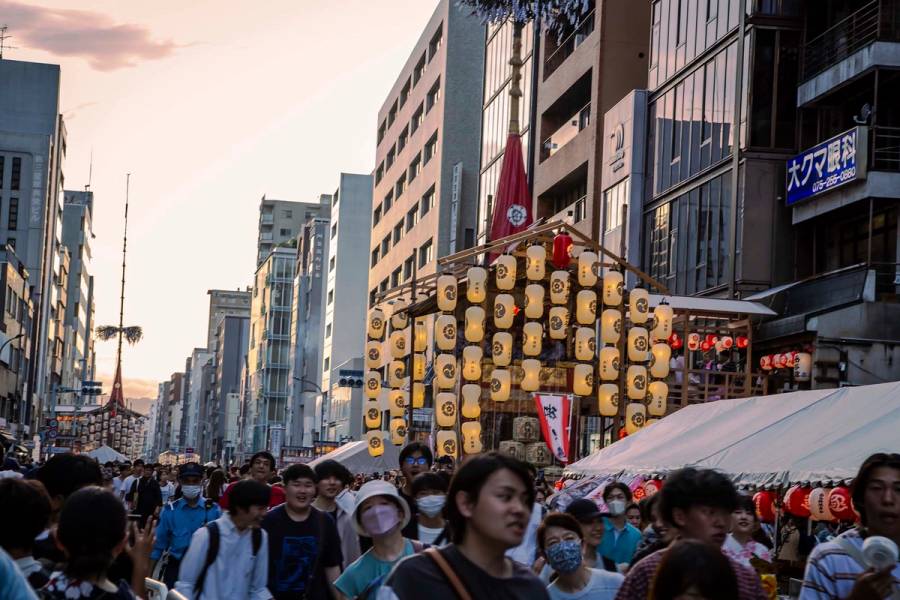
Gion Festival (mid-July)
The Gion Festival is Kyoto's largest annual event and one of Japan's most significant cultural celebrations. It dates back to the 9th century. The main float processions run on July 17 and July 24. The three evenings before each procession are the yoi-yama street festivals, when Shijo and the surrounding streets fill with locals in yukata, food stalls, and lantern-lit floats.
A morning e-bike tour gets you through the city before the festival crowds build. Evenings around the float streets are best explored on foot once the tour is done.
Mitarashi Festival, Shimogamo Shrine (late July)
This is one of those local events most visitors never find. Participants wade through a shallow pool at the base of the shrine to pray for good health. The shrine opens at 6:30am. Shimogamo Shrine sits directly on the Kamo River cycling route and fits naturally into any morning tour from the north of the city.
Gozan no Okuribi (August 16)
On the evening of August 16, five bonfires are lit on the mountains surrounding Kyoto. The largest is the character "dai" on Daimonji mountain to the northeast, lit at around 8pm. Thousands gather along the Kamo River to watch. Arriving by e-bike 30 minutes before the fires are lit is far easier than navigating crowded buses in summer heat. The viewing stretch near Demachiyanagi is one of the best spots.
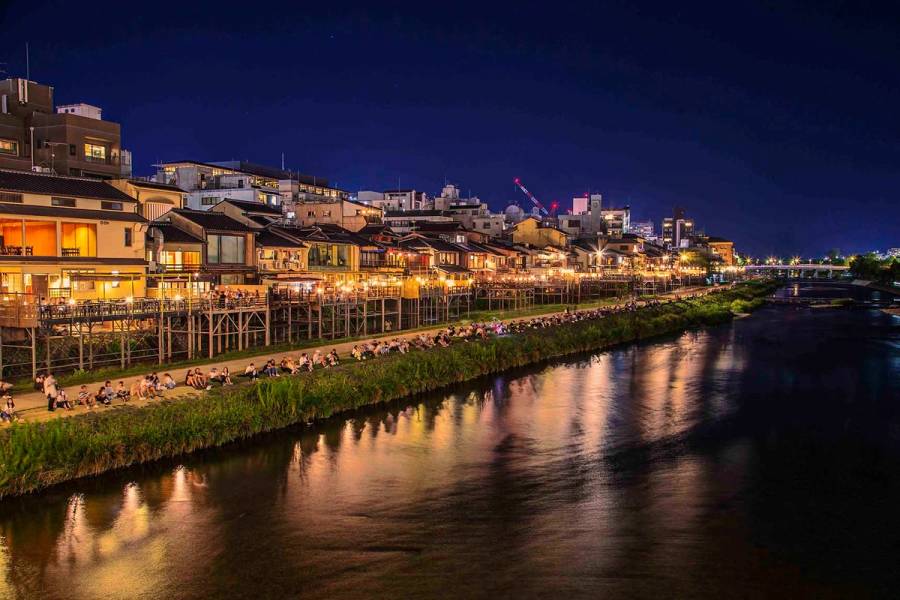
Noryo Yuka (May to September)
From May through September, around 90 restaurants along the Kamogawa between Nijo and Gojo set up riverside dining platforms called noryo yuka. These low timber decks are built over the water. Some serve simple yakitori and cold beer. Others are full kaiseki restaurants. Prices vary accordingly. Booking ahead for July and August is not optional. Turning up without a reservation on a summer Saturday will not work.
Summer in Kyoto by Month
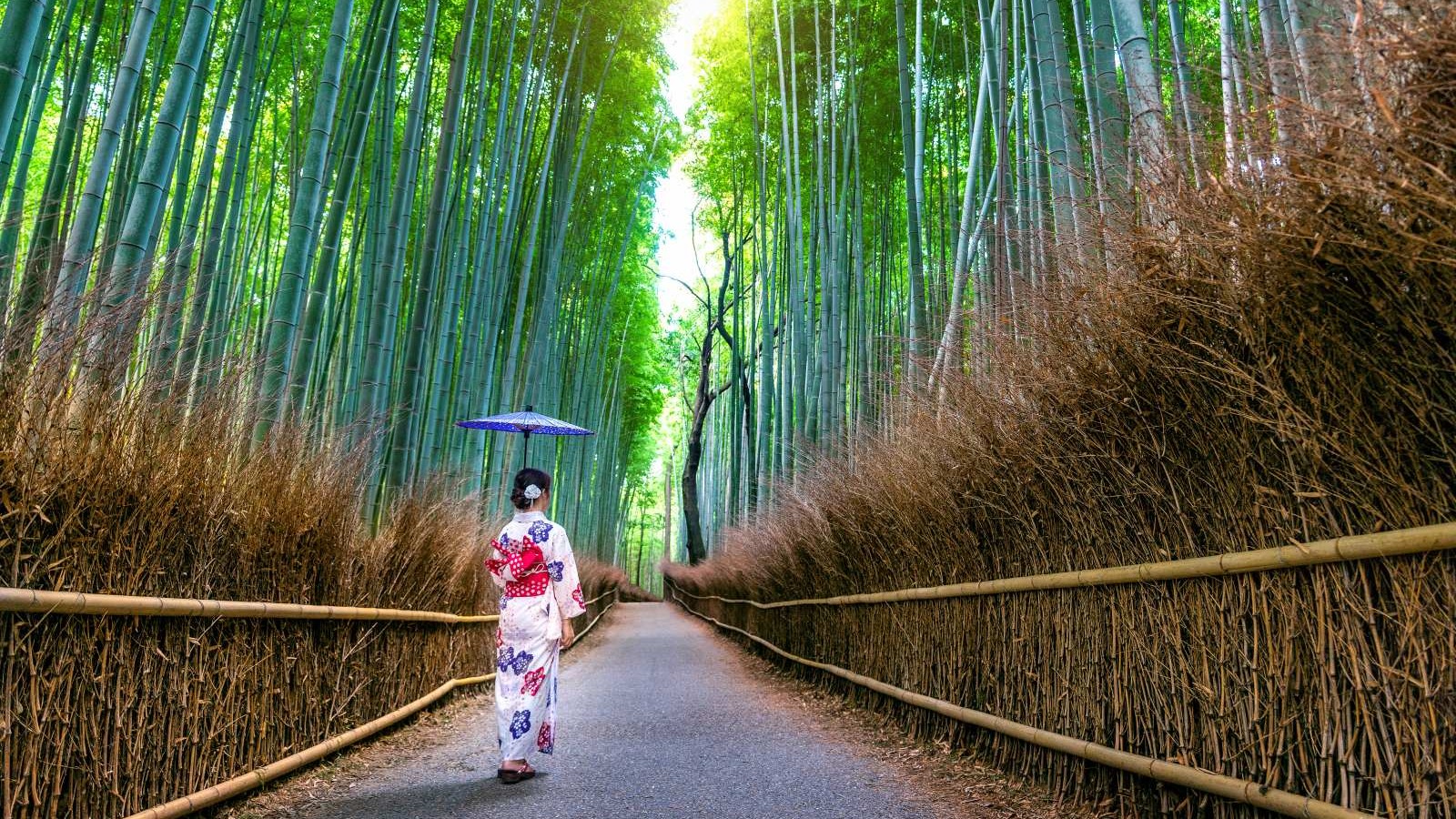
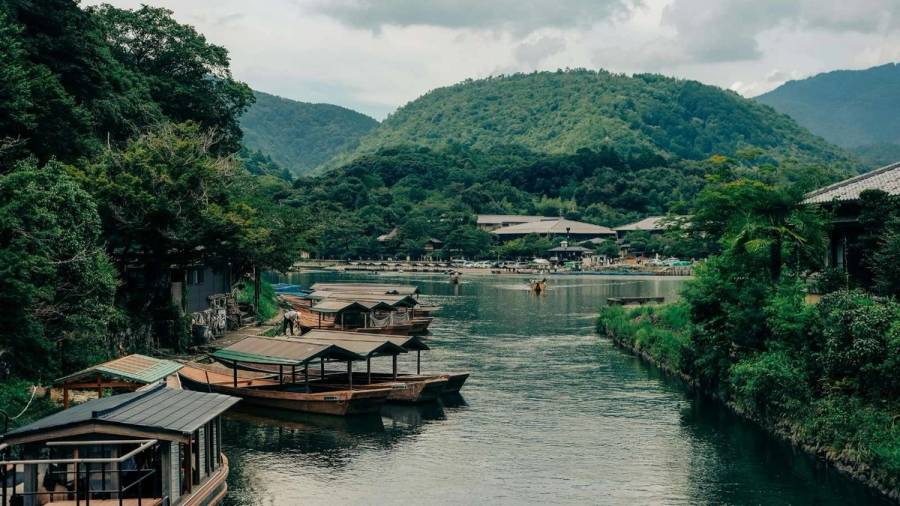
Summer bamboo in Arashiyama is worth the early alarm. The lush deep green of the grove in August looks different from any other season. Timing is everything out there. See the guide to beating the crowds at Arashiyama by e-bike for specific arrival windows.
Which Tour Works Best in Summer
Both NORU tours run year-round. Summer requires a little thought about which suits your group.
The Secret Kyoto E-Bike Tour covers around 14km over 3 hours and 45 minutes. The route stays mostly in the city, with good sections along the Kamo River corridor where air temperature is lower. It is the better option for families, mixed-fitness groups, and anyone who wants to finish with energy left for the afternoon.
The Arashiyama E-Bike Tour covers 24km over 4 or more hours. It is a longer day and physically more active. In summer, the 9am departure matters more here. The bamboo, the mountain views, and the back-road farming sections through Sagano make it worth it.
For groups wanting full flexibility around festival timing or custom routing, a private tour lets you build the day around the summer calendar.
Summer in Kyoto is not the easy season. It requires planning, a sensible start time, and some respect for the heat. An e-bike handles the physical side of the equation. The rest is timing and knowing what this city offers in these months.
Most guests who join a summer morning tour leave wishing they had booked it earlier in their trip. That is usually how it goes.
Frequently Asked Questions
Yes, with the right approach. Start with a morning tour, wear sunscreen, drink water, and avoid cycling during the 11am to 3pm peak heat window. On an e-bike, the motor reduces physical exertion and the movement keeps you cooler than walking.
Yes. Summer is one of the most culturally rich seasons in Kyoto. The Gion Festival runs throughout July, the Gozan no Okuribi bonfire ceremony takes place on August 16, and the noryo yuka riverside dining platforms are open from May through September. Crowds are also smaller than spring and autumn.
Lightweight, breathable clothing works best — synthetic or linen fabrics, not denim. Bring a hat or cap that fits under a helmet, sunscreen rated SPF 50 or higher, and a cooling neck wrap. Convenience stores sell these for around 300 to 500 yen. A compact rain jacket is worth packing in June and early July.
August temperatures regularly reach 35 to 36 degrees Celsius, and humidity makes it feel hotter. Sightseeing is still very manageable with the right strategy — morning starts, shaded routes, and an e-bike that keeps air moving around you. Most guests find a guided morning tour the most practical way to see the city comfortably.