Renting a bike and setting off independently is a perfectly reasonable way to explore Kyoto. The city is flat, well-signposted in many areas, and has a functioning rental network. For visitors who are comfortable with left-side traffic, have a rough sense of the city's layout, and know the key cycling rules, solo riding works fine.
But for a lot of visitors, those conditions do not all apply at once. They are navigating a new city and adjusting to traffic patterns. They are trying to take in their surroundings while managing a set of cycling rules that now carry real financial penalties. That is a lot to hold in your head on a bike in a busy city.
A guided tour does not just make cycling in Kyoto more enjoyable. Under the current enforcement environment, it makes it considerably less risky.
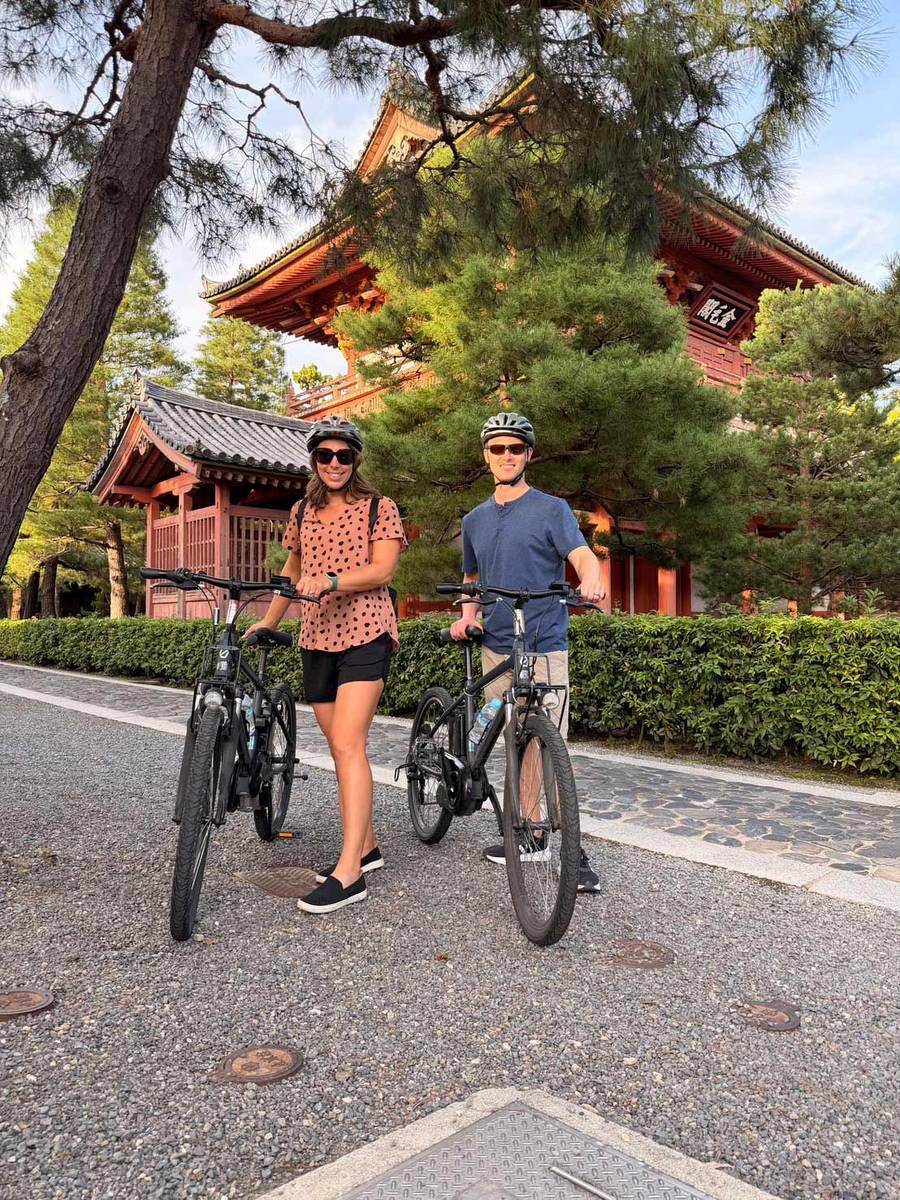
The Problem With Solo Cycling in an Unfamiliar City
Navigation Pulls Your Attention Away from the Road
The most common mistake visiting cyclists make is checking their phone while moving. However, from April 2026, using a phone while cycling carries a ¥12,000 fine under Japan's new Blue Ticket enforcement system. That is the highest single fine in the entire blue ticket category. It applies whether you are:
- Holding the phone to your ear
- Glancing at Google Maps while rolling
- Checking a message at a red light
On a guided tour, there is no navigation to manage. The route is known, the stops are planned, and the phone stays in your pocket for the entire ride.
Left-Side Traffic Takes Adjustment
Japan drives on the left. For visitors from the United States, Canada, continental Europe, or most of Asia, this is the reverse of what they are used to. Most people adjust reasonably quickly on a straight road. The difficulty comes at intersections, when turning, and in narrow streets where cyclists traveling in opposite directions have to negotiate the same space.
Riding against the flow of traffic is a ¥6,000 blue ticket violation. More importantly, on Kyoto's narrower backstreets, it creates a genuine safety risk. The streets are not wide enough for a cyclist going the wrong way and an oncoming car to pass each other comfortably. Understanding how Kyoto's streets actually work before you set off makes a real difference.
On a guided tour, the guide sets the pace and the line. The group follows. There is no moment where a solo rider has to think through which side of an unfamiliar intersection they should be on.
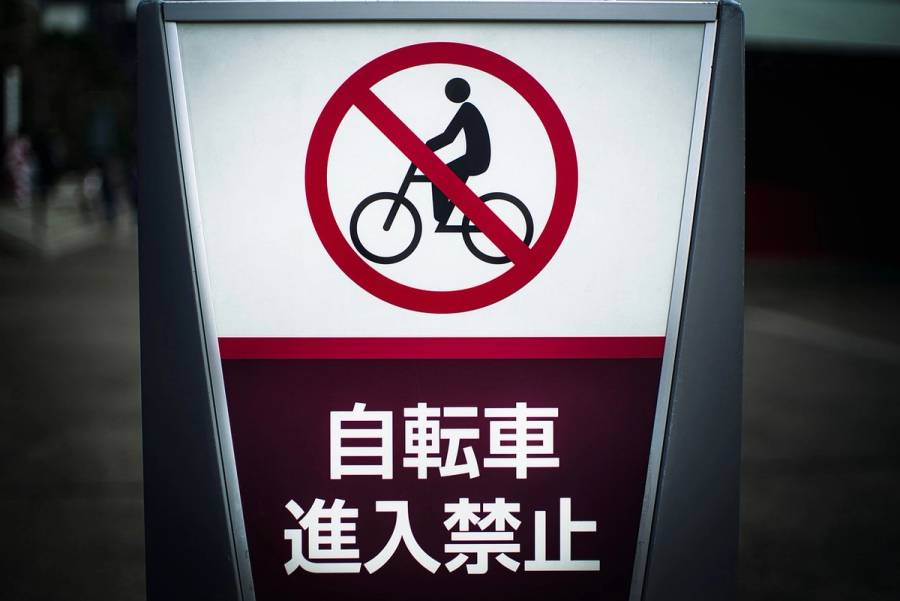
Signage Is Mostly in Japanese
Kyoto's cycling restrictions are not always obvious to visitors. Some streets in the Gion district are pedestrianised or have time-based access restrictions. The signs indicating this are usually in Japanese only. Cycling past one is a violation regardless of whether you understood it.
Other things that catch solo riders off-guard:
- Bicycle parking in popular areas like Arashiyama is designated. Leaving a bike outside a designated area can result in it being impounded.
- Recovery means finding the collection point, paying a fee, and losing time from your trip.
- None of this is signposted in English.
A local guide knows which streets are restricted, when restrictions apply, and where to park without risk. That knowledge is not easy to acquire from a map or a travel app.
What a Guided Tour Actually Removes From the Equation
The Phone Stays in Your Pocket
This is the single biggest practical benefit for cycling safety in 2026. On a guided tour in Kyoto, you do not need your phone for navigation at any point. The route is managed by the guide. Stops are called. Directions are given verbally. You ride the city rather than manage it.
Removing the phone from the equation eliminates the highest-penalty blue ticket risk entirely. For a solo rider, that requires significant discipline. For a guided tour rider, it is simply the natural condition of the ride.
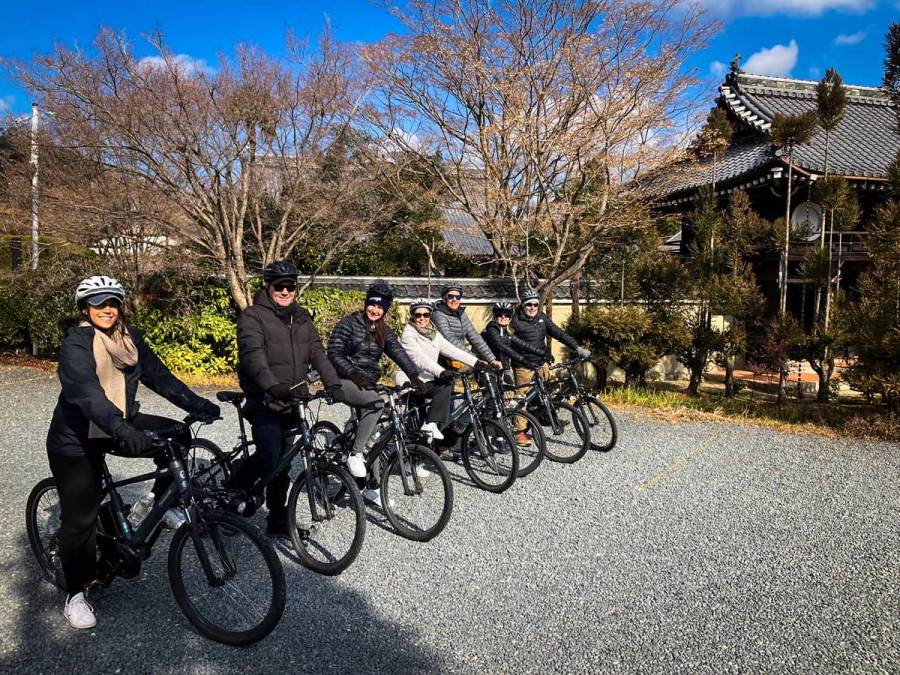
The Group Stays Road-Legal
Before every NORU tour, the group gets a briefing on road behavior. It takes a few minutes and covers the essentials:
- Ride on the left, in the same direction as traffic
- Single file on narrower streets
- Phone away for the duration of the ride
- Stop at all traffic signals
For many visitors, that briefing is the first time anyone has explained Japan's cycling rules clearly. The official guidance from the National Police Agency exists, but most tourists do not find it before arriving. By the time the group moves off, everyone knows the basic rules and has ridden a short stretch to get comfortable with the bike and the road position.
The Route Avoids Problem Areas
A guided tour route is built around Kyoto's restrictions and crowd patterns. In practice, that means:
- Pedestrianised areas are approached correctly or avoided entirely
- The bamboo grove in Arashiyama is visited on foot from a nearby parking point, not ridden through
- The timing of each section is planned around pedestrian traffic
- Restricted streets in Gion are navigated with the access rules in mind
A solo rider planning a route from a tourism website does not have that layer of local knowledge built in.
What Solo Riders Miss Without Local Knowledge
What Takes Years to Learn
Kyoto's street-level knowledge accumulates over time. It is not the kind of information that appears clearly on a tourist map. Knowing which lanes connect where, which backstreets are open to cyclists, and where the quieter routes run between major sites changes the experience of the city entirely.
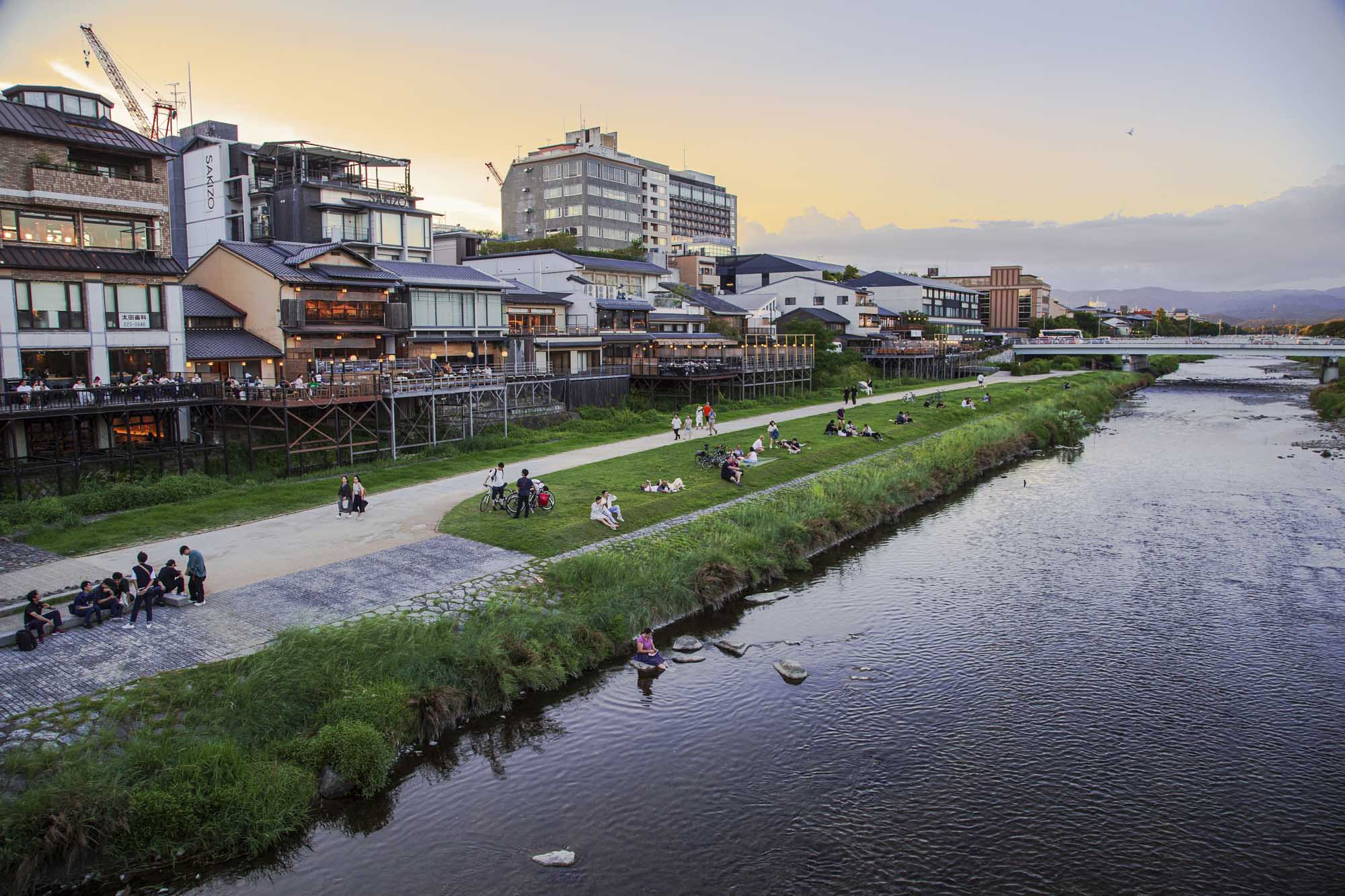
The streets behind Nishiki Market connect to the backstreets north of Gion. Most visitors never find them. The route along the base of the Higashiyama mountains passes through residential lanes that are quiet, manageable, and far more interesting than the main tourist road. The Kamo River path connects districts that most visitors only reach by taxi or subway.
A guided tour puts that knowledge directly into the ride. You cover ground that solo riders rarely find, at a pace that lets you take it in.
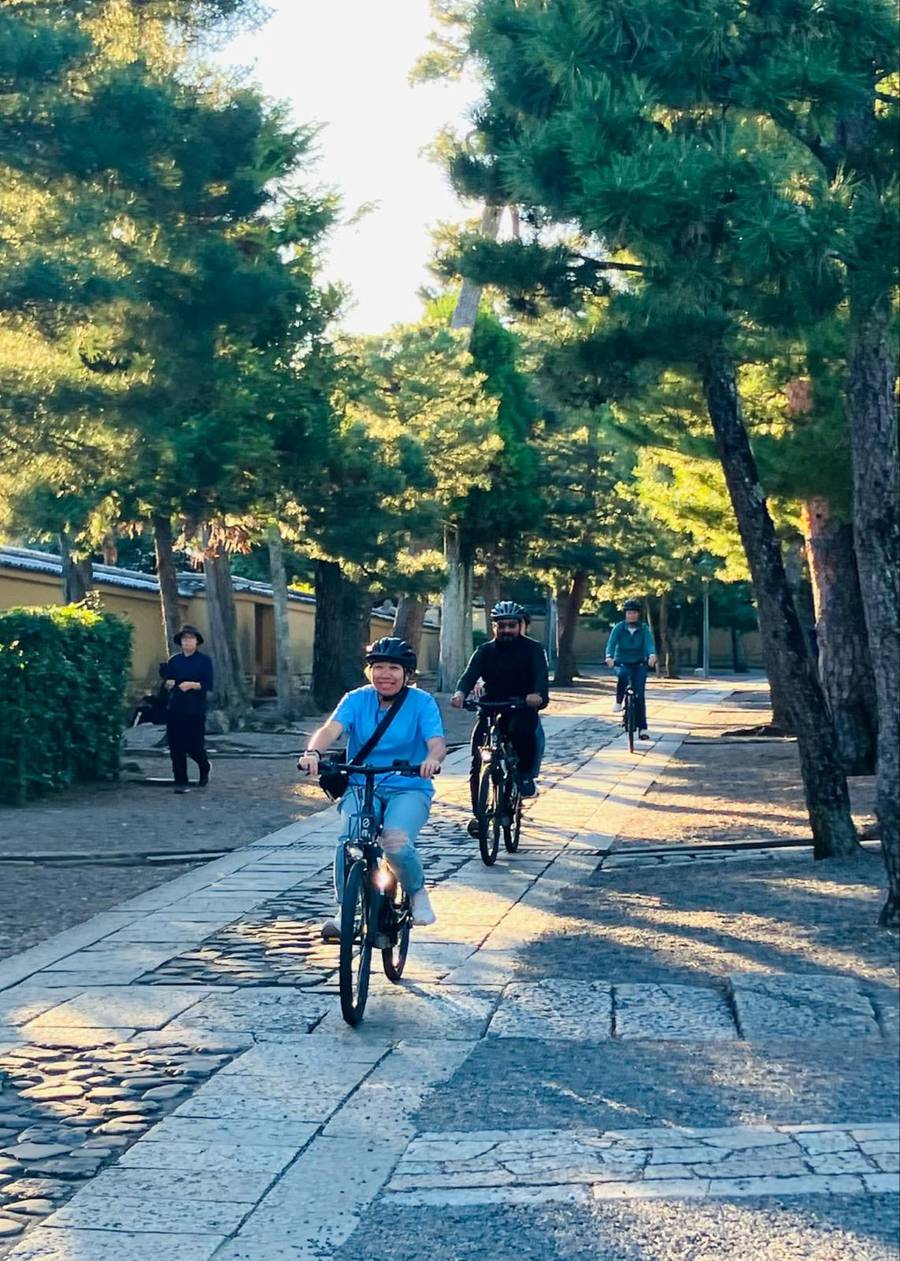
Small Groups Make a Difference
NORU tours run with a maximum of eight riders. At that size, the group:
- Moves through narrow lanes without creating an obstruction
- Stays together without effort
- Allows the guide to talk without stopping
- Gets questions answered on the move
Larger commercial tours on Kyoto's popular streets can create the opposite effect. A long line of cyclists becomes an obstacle for pedestrians and other road users, and the person at the back has no connection to what the guide is saying at the front. For more on why group size matters in Kyoto specifically, see why small-group tourism works differently in this city.
The E-Bike Factor
Motor Assist Without the Uncertainty
NORU tours use certified Japanese-spec e-bikes that meet the Road Traffic Act's legal requirements for motor assist. No licence needed. No registration. No compliance questions. The bikes are maintained, fitted before each tour, and replaced on a regular cycle.
For visitors who have never ridden an e-bike in a Japanese urban environment, the first few minutes in a city setting can feel different from what they expected. The assist is responsive. Kyoto's flat central streets keep the motor engaged. Riders who are used to working harder on a standard bike sometimes find themselves moving faster than intended before they have adjusted to the feel.
Having a guide manage the pace through the first streets of a tour gives new e-bike riders time to find their comfort level before the group reaches busier sections of the route. Solo riders on rented e-bikes do not have that adjustment period built in. For more on how e-bikes are regulated in Japan and what that means for tourists, the full breakdown covers the legal detail.
Cycling Kyoto With Confidence
The 2026 enforcement rules did not make Kyoto a difficult city to cycle in. For a rider who knows the basic rules and pays attention, the streets are manageable and the experience is genuinely good. What changed is the cost of getting something wrong:
- ¥12,000 for phone use while riding
- ¥6,000 for riding against traffic
- ¥6,000 for dangerous pavement cycling
- ¥5,000 for riding without lights at night
A guided tour removes most of the variables where those mistakes happen. The navigation is handled. The route is legal. The bikes are compliant. The rules are explained before the first pedal stroke. What remains is the city itself — the backstreets, the temple districts, the river paths, and the neighbourhoods that most visitors never reach.
NORU's Secret Kyoto tour covers the hidden side of the city. The Arashiyama tour takes in the western reaches and the approach into the hills. For visitors with a private group or specific interests, custom private tours are available on request.
Kyoto by bicycle rewards the rider who comes prepared. A guided tour is the most direct way to get there.
Frequently Asked Questions
Cycling independently in Kyoto is manageable for riders who are comfortable with left-side traffic and familiar with Japan's road rules. From April 2026, however, violations like phone use and wrong-side riding carry on-the-spot fines of up to ¥12,000. Solo riders navigating an unfamiliar city face more situations where those violations can occur accidentally.
A guided tour removes the most common sources of cycling violations in Kyoto. Navigation is handled by the guide, so there is no need to check your phone while riding. Routes are planned around pedestrian areas and cycling restrictions. The group receives a rules briefing before departure, and all bikes are certified to Japanese road standards.
No. NORU's e-bike tours are designed for all fitness levels. The electric assist handles the small number of gradients on the routes, and the guide sets a pace that suits the group. A short familiarisation ride at the start of each tour gives new e-bike riders time to get comfortable before the group reaches busier streets.
NORU tours run with a maximum of eight riders. Small groups move more easily through Kyoto's narrow backstreets, stay together without effort, and allow the guide to communicate with everyone throughout the ride. Larger tour groups can create obstructions on Kyoto's busier streets and reduce the quality of the experience for riders at the back of the group.