Most visitors write off winter before they've thought it through properly. They picture grey skies and closed gardens, book their trip for spring or autumn instead, and never ask whether a Kyoto winter might actually be worth riding through. After years of guiding NORU tours in every season, I can tell you it's colder, it's quieter, and in a few specific ways, it beats the seasons everyone else books.
How Cold It Actually Gets
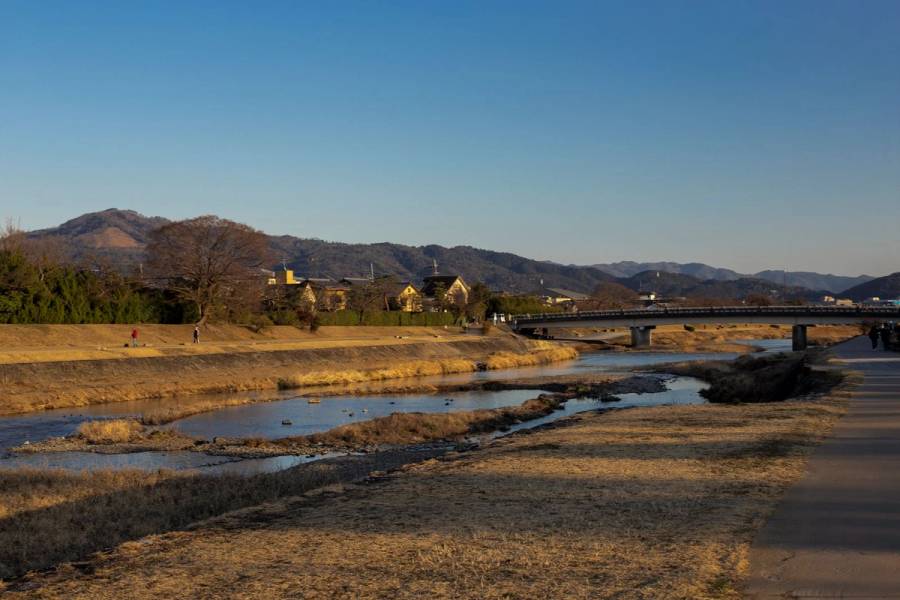
Kyoto sits in a basin, and basins hold onto cold air. Mornings in December and January can be genuinely sharp, sometimes close to freezing, while afternoons often warm up enough that a good jacket is all you need. Japan Meteorological Agency data for Kyoto puts average January highs around 9°C and lows near 2°C, which tracks with what I feel on the bike most mornings. It's cold enough to notice, not cold enough to ruin a ride.
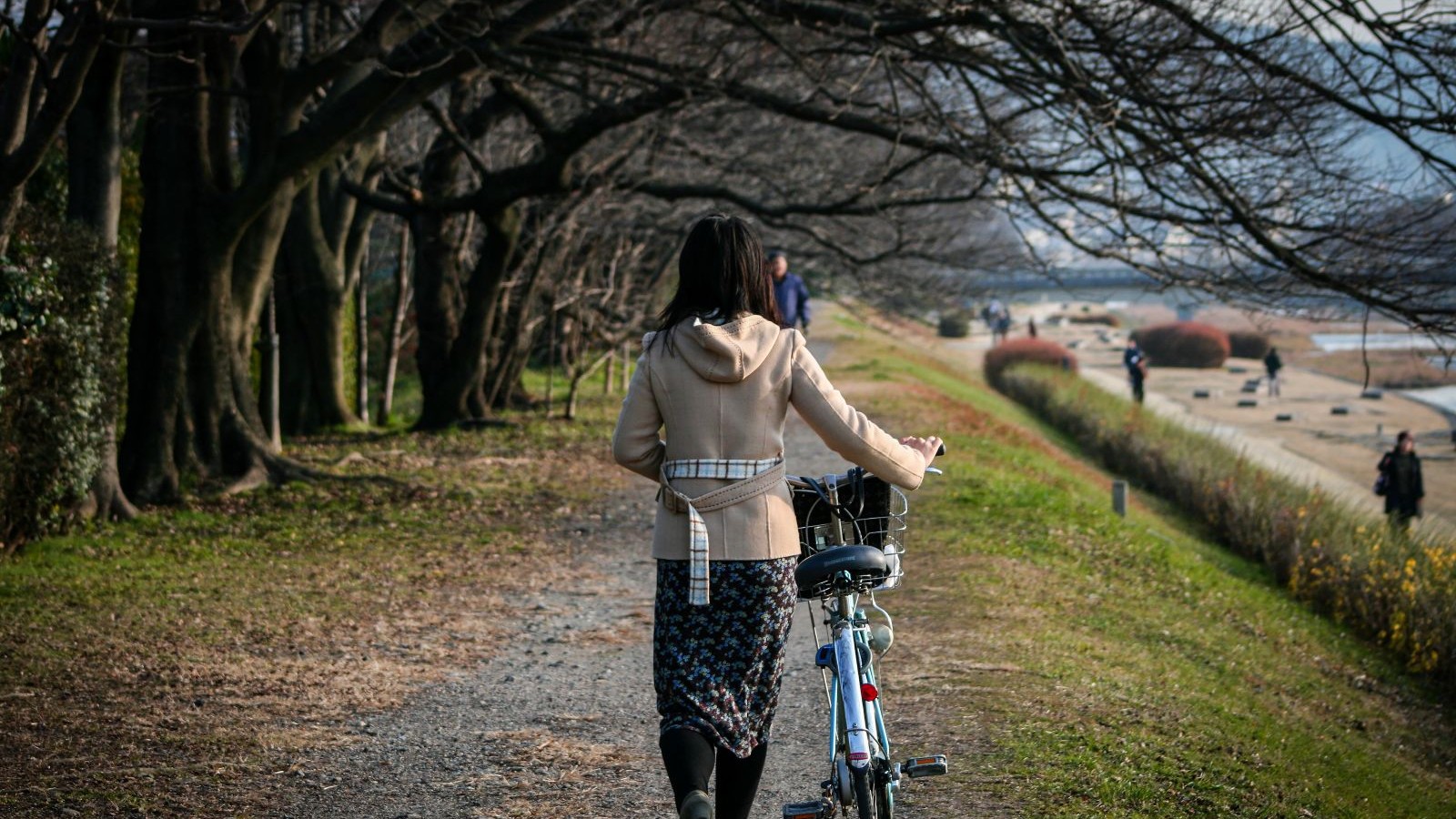
Riding actually helps here more than walking does. You generate your own warmth once you're moving, and the wind chill on a bike is less of an issue than people expect at our pace, since we're not moving fast enough for it to bite.
Why the Quiet Is the Whole Point
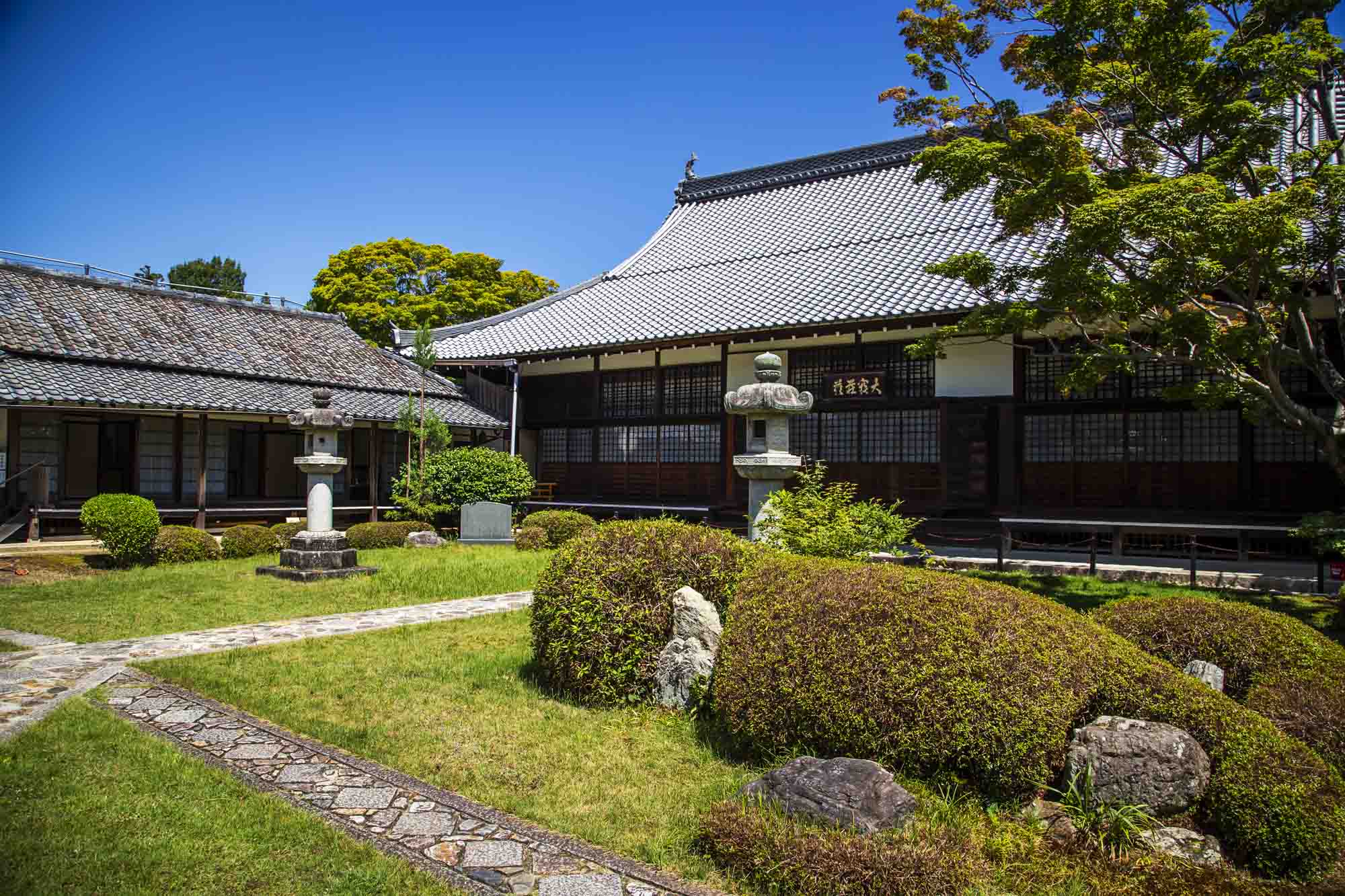
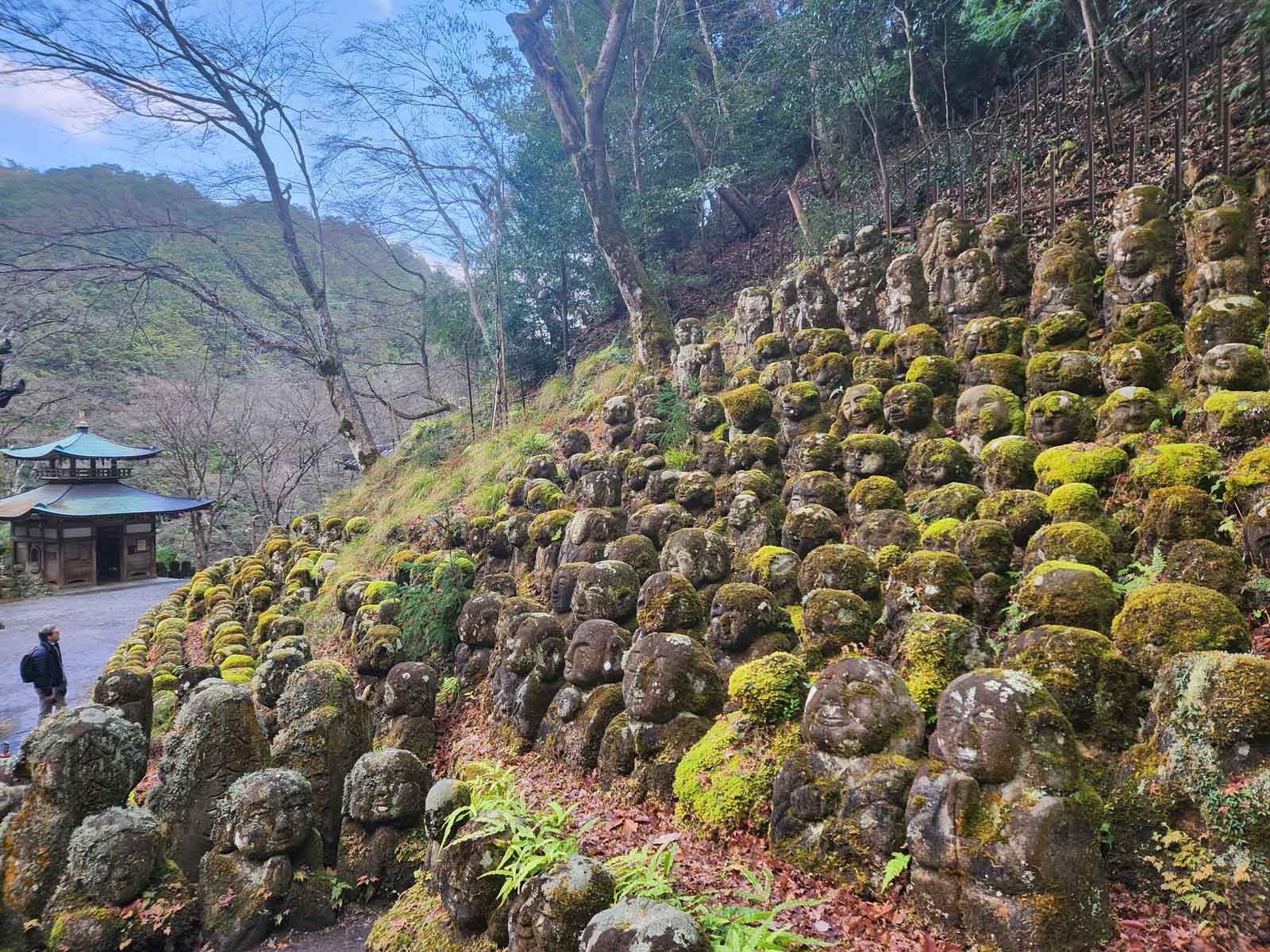
The temples that are wall-to-wall in April and November empty out almost completely by December. Where spring or autumn might mean queuing at the gate and shuffling through with fifty other people, a winter morning at the same spot can mean five or six visitors, total. That difference is the whole argument for riding this time of year.
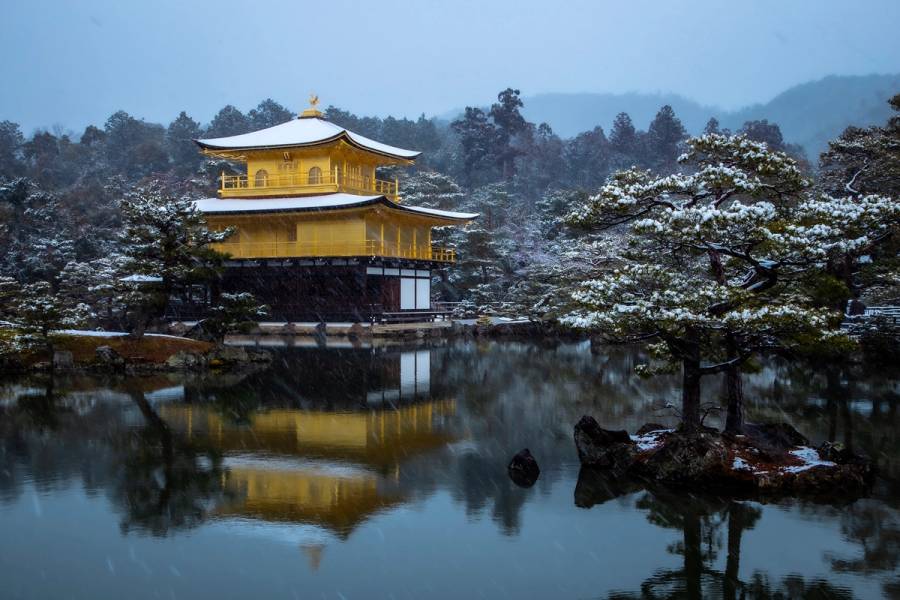
Snow adds something spring and autumn simply can't offer. Kinkaku-ji under a dusting of snow, the gold pavilion against white roof tiles and a still pond, is one of the most striking sights in the city, and it happens only a handful of days most winters. Worth knowing honestly: it isn't part of our standard routes, since it draws a crowd of its own even in winter, but if snow falls during your trip, it's worth seeing on your own before or after a ride with us.
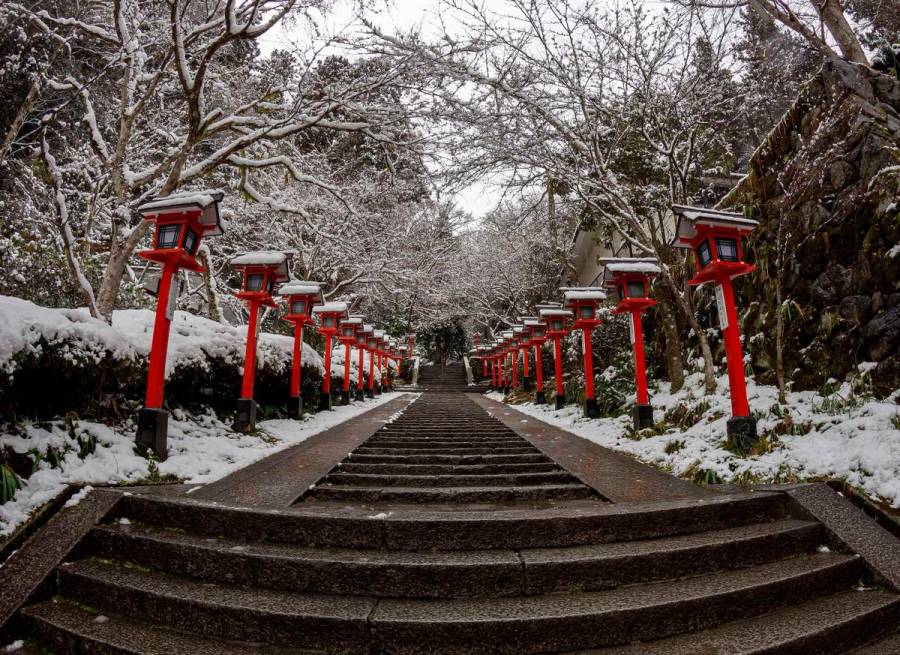
The same goes for Kurama, north of the city, where a stairway lined with red lanterns climbs through snow-dusted trees toward the shrine. It's outside realistic riding distance for a day tour and involves a proper climb on foot, but it's the kind of add-on that pairs naturally with a Kyoto winter trip if you have an extra day.
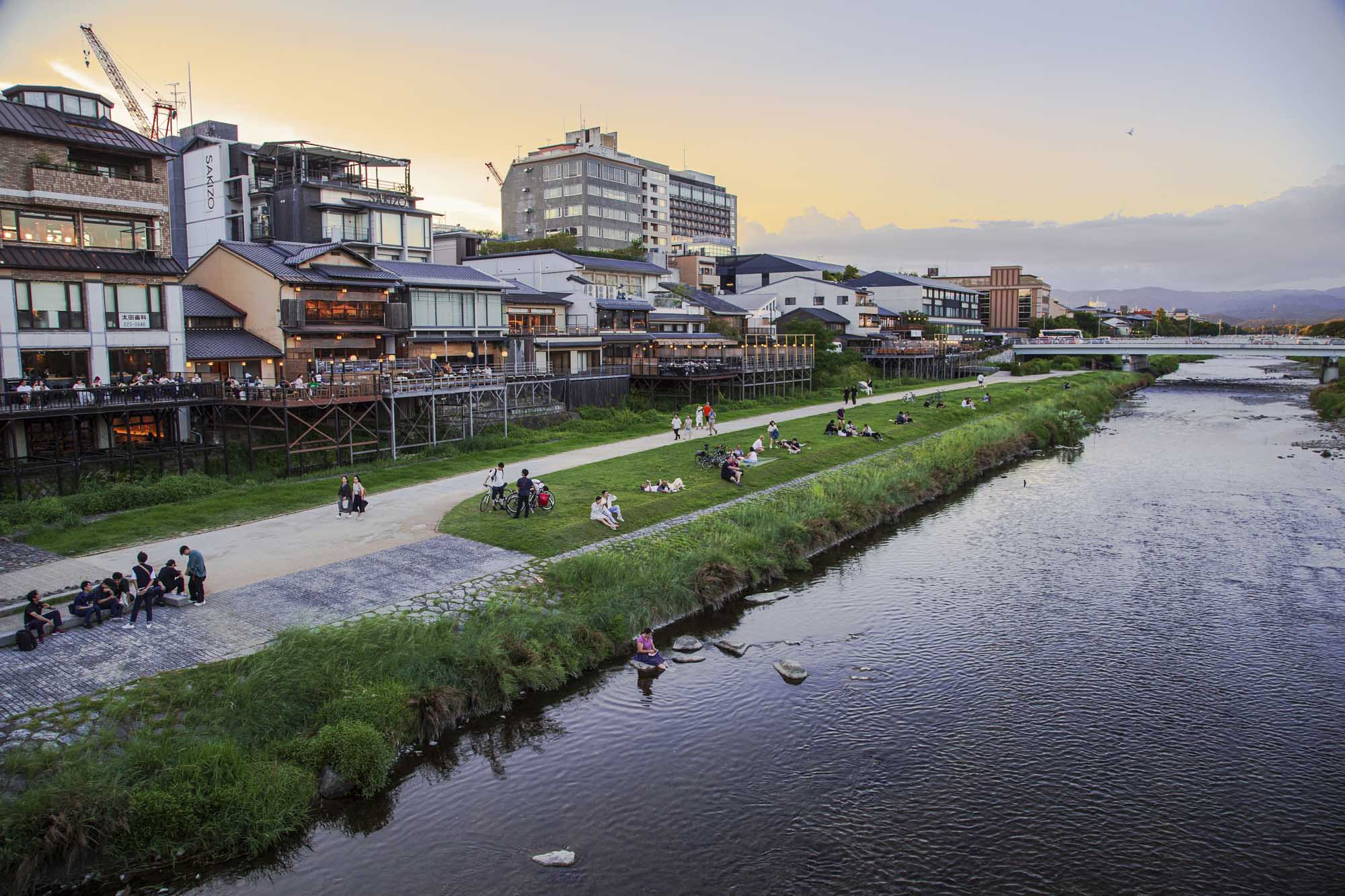
What we do ride past, on quiet backstreets and along the river, is close to empty by comparison. No crowds to route around, no timing to plan carefully. Just the city, cold and clear, mostly to yourself.
What Changes About the Ride Itself
Daylight is shorter, so we sometimes adjust start times to make the most of the light rather than starting later like we might in summer. The e-bikes make a real difference here as well. Cold weather makes any physical exertion feel harder, and the pedal assist means you're never working hard enough to actually feel it. Guests notice this more in winter than in any other season.
Snow happens most years, usually a light dusting rather than heavy accumulation, and it doesn't automatically cancel a tour. We adjust the route if conditions call for it and make the call on the day. What snow does do is make the quiet temples even quieter, and a dusting on temple roof tiles is one of the more striking things you can see in Kyoto, full stop.
What to Wear on a Winter Ride
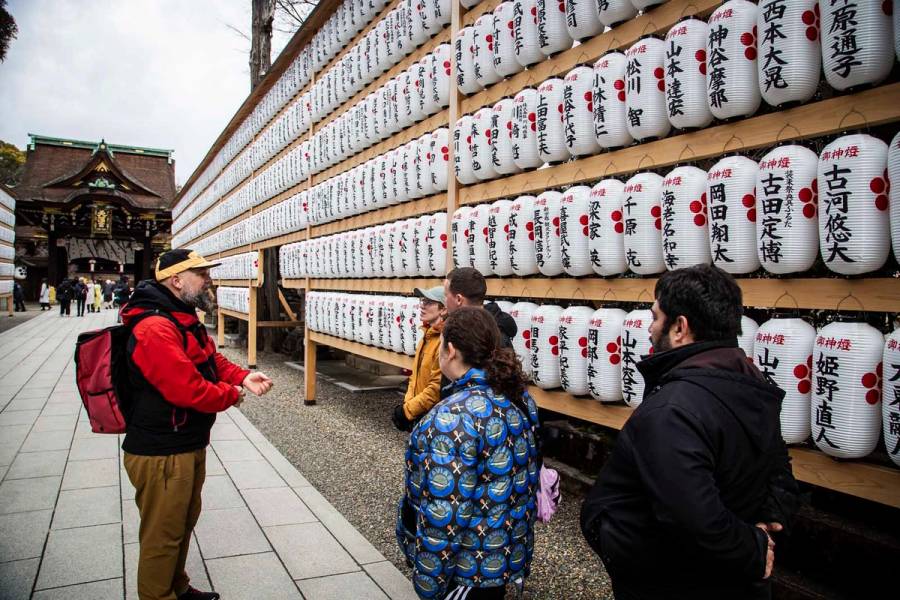
Layers matter more than any single piece of gear. Mornings can sit close to freezing while afternoons warm up considerably, so something you can take off partway through the ride works better than one heavy coat.
A few specifics worth getting right:
- Gloves — your hands are exposed to wind the whole ride, more than any other part of you. Thin, close-fitting gloves work better than bulky ones, since you still need to grip the brakes properly.
- A windproof outer layer — wind matters more than temperature on a bike. A jacket that blocks wind does more for comfort than an extra jumper underneath.
- Warm socks, normal shoes — you don't need hiking boots. Closed shoes and a decent pair of socks are enough, since your feet aren't doing much work once the e-bike assist kicks in.
- A hat that fits under a helmet — thin beanies work, bulky ones don't. Worth checking this before the day, not on the morning of.
If snow is forecast, dress as if it will happen, since a light dusting genuinely doesn't slow us down, but you'll be glad of the extra layer either way.
Who Winter Genuinely Isn't For
If you came to Kyoto specifically for cherry blossoms or peak autumn color, this isn't your season, and I'd rather tell you that directly than have you show up disappointed. If you want guaranteed warm-weather riding, book spring or summer instead. Winter suits people who want fewer crowds, don't mind a cold morning, and are curious about a side of Kyoto most visitors never see because they never book this time of year.
Booking a Winter Tour
Availability tends to be easier in winter simply because fewer people are booking. If your travel dates are fixed and happen to fall between December and February, that's not a compromise, it's an advantage, since you'll likely get more flexibility on dates than you would trying to book a spring weekend.
The 2026 Blue Ticket cycling rules don't pause for the season either. Our guide on Kyoto's cycling rules, routes, and fines applies exactly the same in January as it does in April, and we brief every rider on it regardless of the month.
- Secret Kyoto E-Biking — 3h 45m · ~14km · Easy · ¥15,000
- Arashiyama E-Biking — 4h 30m · ~24km · Moderate · ¥15,000
- Private Tours — Flexible · 2 to 12 people
Frequently Asked Questions
Mornings can approach freezing, but afternoons are often comfortable in a good jacket. Riding generates its own warmth, which helps more than people expect.
Yes, noticeably. Where spring and autumn can mean queuing at the gate of a major temple, a winter morning at the same spot might mean five or six other visitors, total.
Snow falls most winters, usually a light dusting. Kinkaku-ji and the mountain shrine at Kurama are two of the most striking sights when it does, though neither is part of our standard riding routes, both are worth visiting separately if your trip lines up with a snowfall.
They do. The pedal assist matters more in winter, since cold makes exertion feel harder, and the motor keeps that effort manageable.