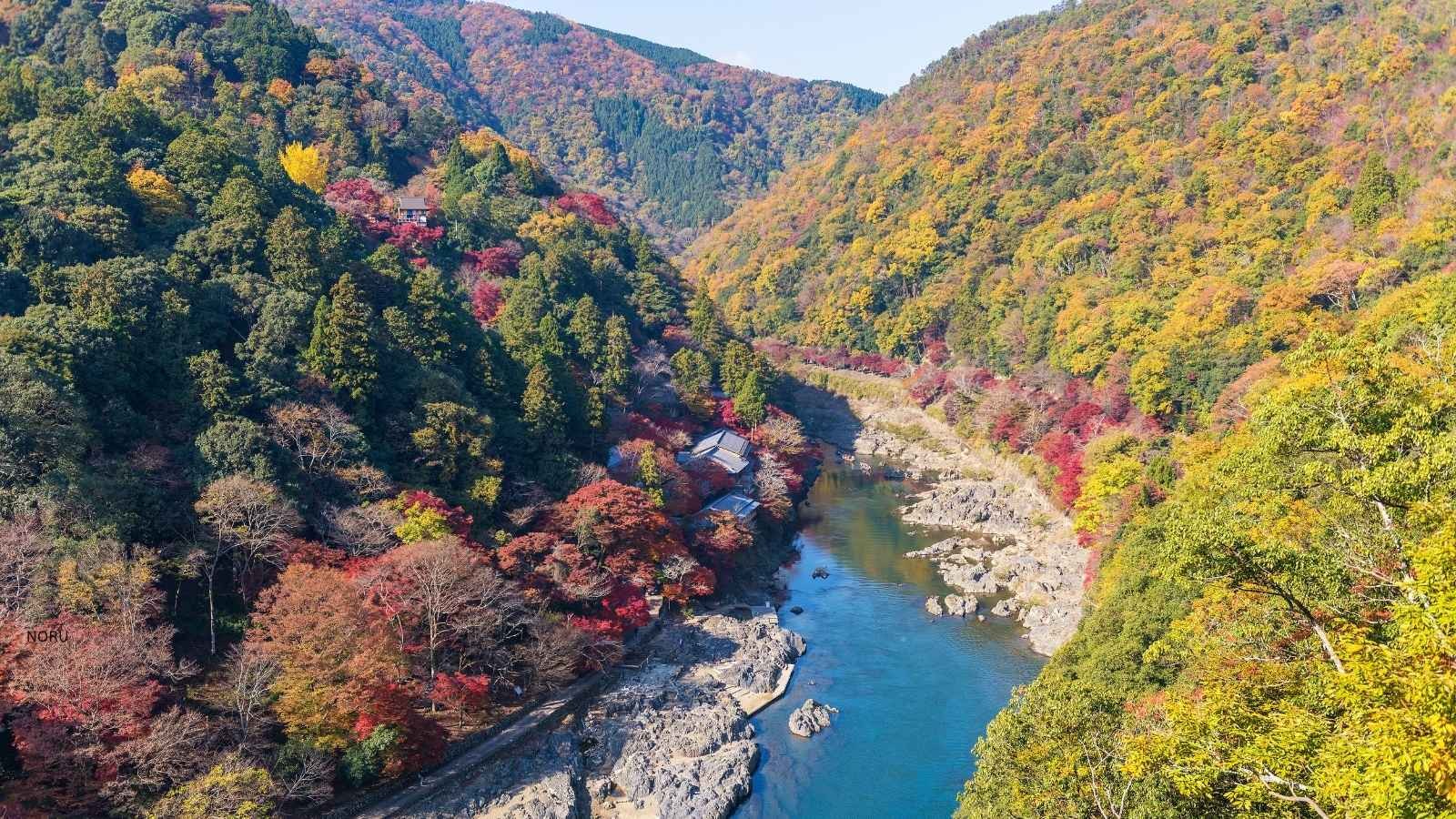
Without a doubt, the fall is my favorite season to cycle in Kyoto! I know that everyone plans their Kyoto trip around cherry blossoms in spring, however, in my opinion, autumn is the best season to experience Japan's ancient capital by bicycle.
My reasons for this are as follows:
- In the fall, Kyoto weather is the perfectly mild, not too hot and not too cold.
- The koyo leaves (紅葉), when the leaves change color, are picturesque and last longer than cherry blossoms, which only lasts two weeks.
- Kyoto has fantastic seasonal food in the autumn because the seasonal harvest at the end of summer.
- It is the perfect time to ride through the city because of all these factors and the addition that the crowds get smaller at this time of year.
When Autumn Actually Peaks
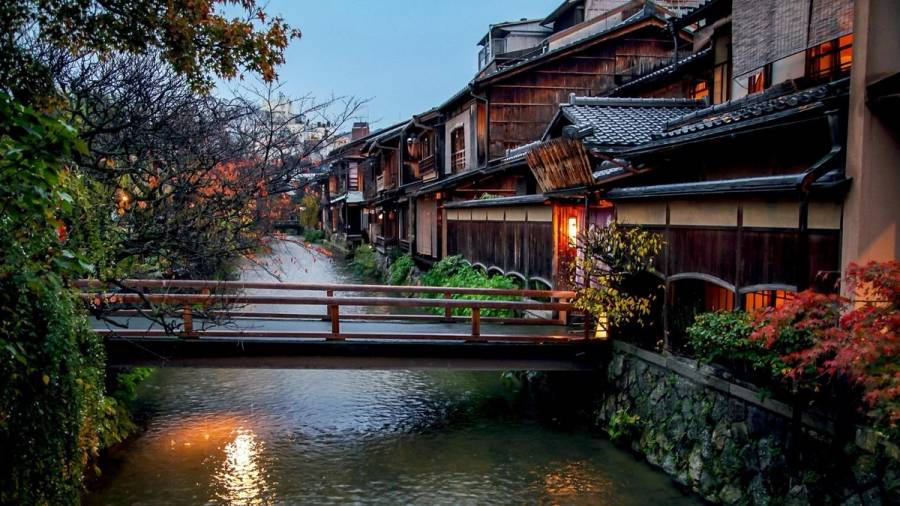
The koyo leaves (紅葉), Kyoto's autumn leaf season, doesn't arrive all at once. It moves down from the hills into the city over several weeks, which means the timing isn't a narrow window like cherry blossom season.
- Late October to early November: the hills and higher elevations start turning first
- Mid-to-late November: peak color moves into central Kyoto and most of the famous temple gardens
- Early December: the last color holds on in a few sheltered spots, often after most visitors have already left
That slow rollout is actually good news if you're planning a trip. You get a longer window than spring's cherry blossoms give you, and a bit of flexibility if your dates shift.
Why Riding Beats Walking This Season
Autumn is Kyoto's second-biggest tourist season after spring, and the popular viewing spots get genuinely crowded by mid-morning. A bike changes that equation more than people expect. You can cover the distance between three or four good viewing spots in the time it takes to walk to one, and you're not stuck queuing for a bus that's already full of people with the same idea.
Our routes worth riding piece covers this in more depth if you want the wider picture, but autumn specifically rewards early starts and a bit of route knowledge, since the famous spots fill up fast and the quieter ones don't get much attention at all.
Where the Riding Is Best
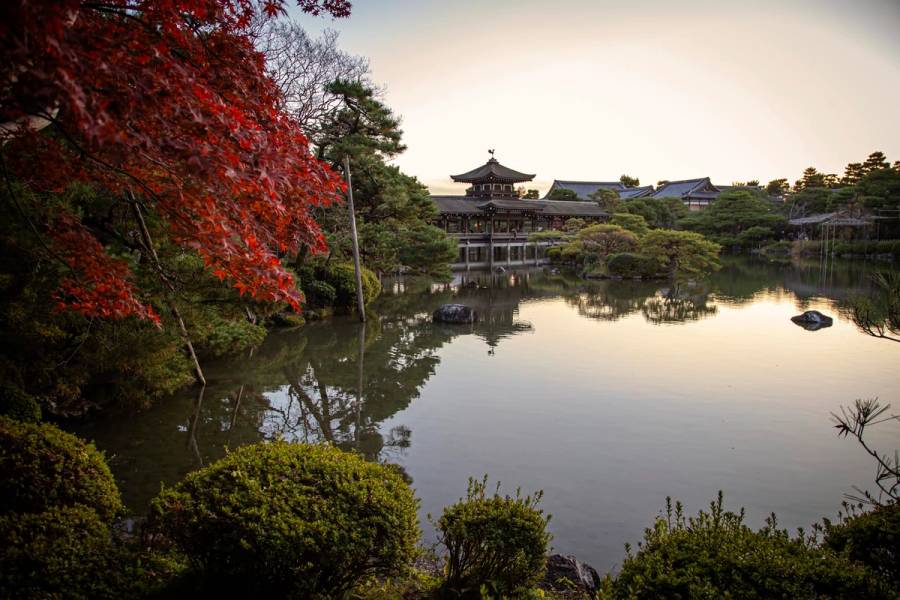
The eastern foothills, especially the areas around Nanzen-ji and Eikan-do, hold some of the most striking color in the city, and riding lets you link a few different temple approaches without backtracking through crowds on foot.
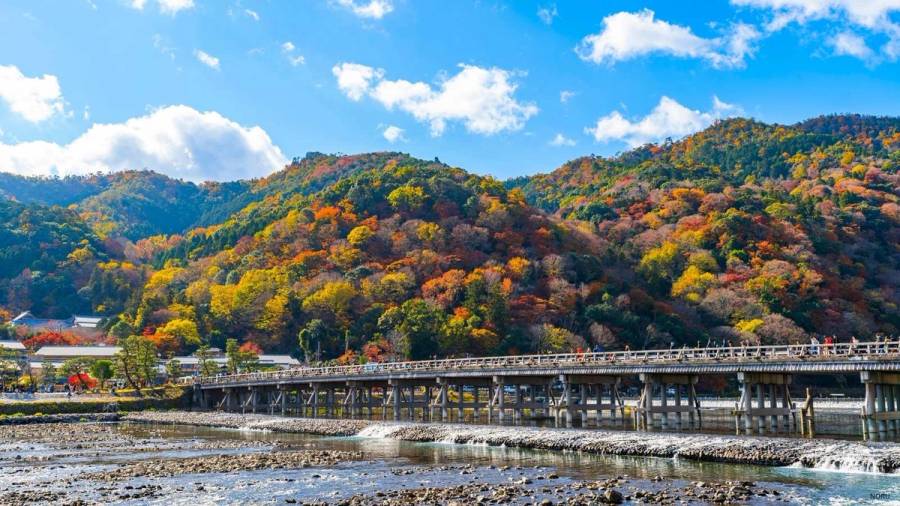
Arashiyama, already known for its bamboo grove, turns into something else entirely in autumn once the maples along the river and hillsides catch color. Our Arashiyama E-Biking tour runs through exactly this stretch, and November is genuinely one of the best months to do it.
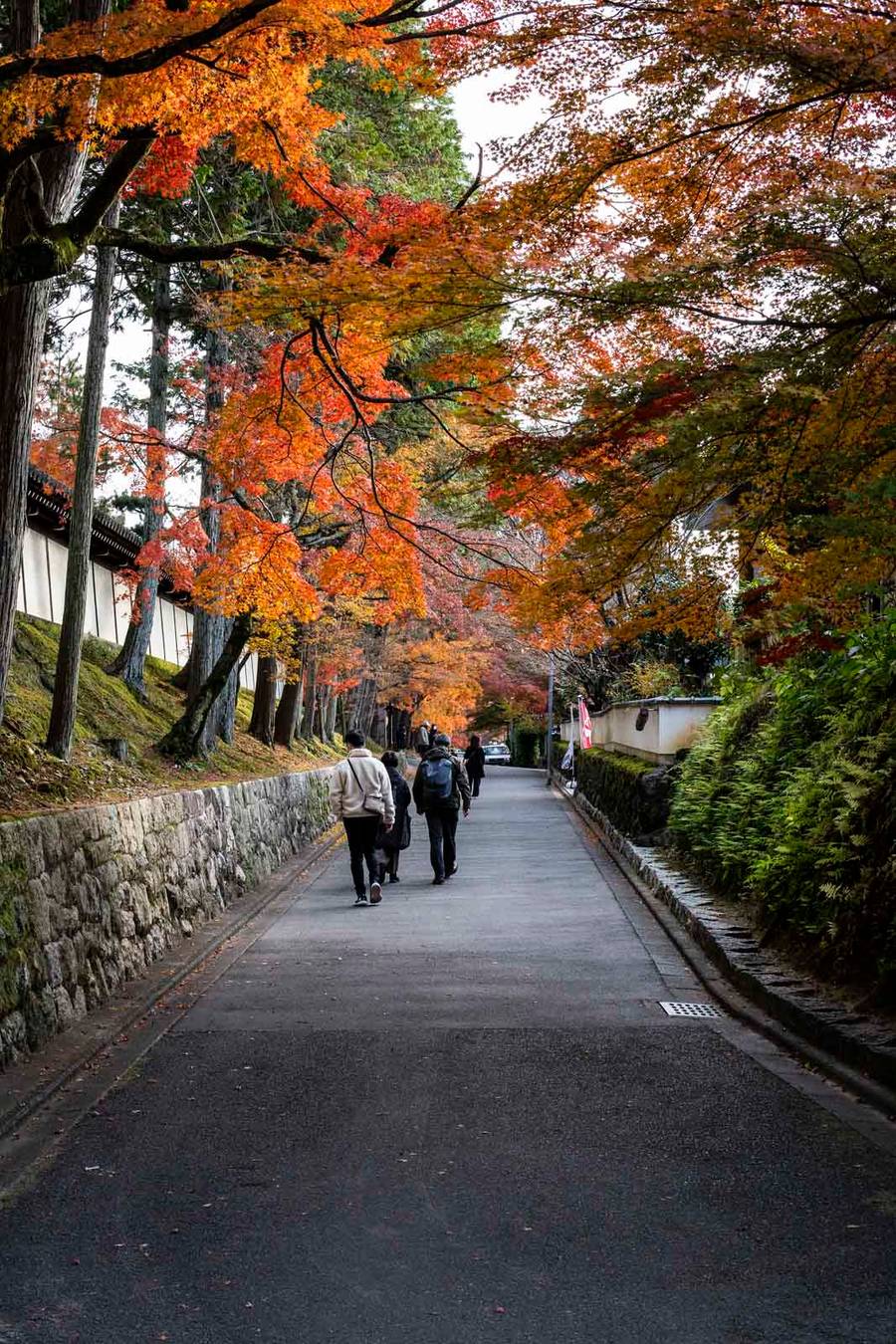
Tofukuji's maple corridor is one of the most photographed spots in the city come November, and for good reason. The approach path runs beneath a canopy of maples that turn a deep, layered red, with a stone wall running alongside for most of the walk. It gets busy fast once word gets out that the colour has peaked, so this is one where riding in gives you a real edge. You can reach it before the buses do, take it in properly, and be gone before the crowds arrive.
The Kamo River path stays flat and easy right through autumn, and it's a good option if you want color without the climbing. It's also one of the quieter rides even during peak season, since most visitors head straight for the named temples instead.

What Changes About Riding in Autumn
Days get shorter, so a ride that starts at 9am in summer might need to start closer to 8am in November if you want to make the most of the daylight. Mornings and evenings turn cool even when afternoons stay comfortable, so a light layer is worth packing even on a clear day.
The 2026 Blue Ticket cycling rules also don't take a season off. If anything, autumn's crowded viewing areas mean more foot traffic to navigate carefully, and more attention from police in the busiest districts. Our guide on Kyoto's cycling rules, routes, and fines is worth a read regardless of when you visit, but it matters a bit more when the sidewalks are packed with leaf-peepers.
Booking Around the Color
If autumn color is the whole reason for your trip, book a little earlier than you think you need to. Both standard tours fill up through November, and if you want a specific week for peak color in a specific area, don't leave it until the week before.
Secret Kyoto E-Biking — 3h 45m · ~14km · Easy · ¥15,000
Arashiyama E-Biking — 4h 30m · ~24km · Moderate · ¥15,000
Private Tours — Flexible · 2 to 12 people, good if you want your route built entirely around chasing color at your own pace
Frequently Asked Questions
Mid-to-late November for most of the city, though higher elevations turn earlier in late October and a few sheltered spots hold color into early December.
Close to it, especially at the famous temples. Riding a bike helps you get ahead of the crowds and reach quieter spots the buses don't stop at.
Earlier than you'd think. Both standard tours fill up through November, so if a specific week matters to you, book it well before you land in Kyoto.
Just a light layer for cooler mornings and evenings. Afternoons usually stay comfortable enough for normal riding gear.